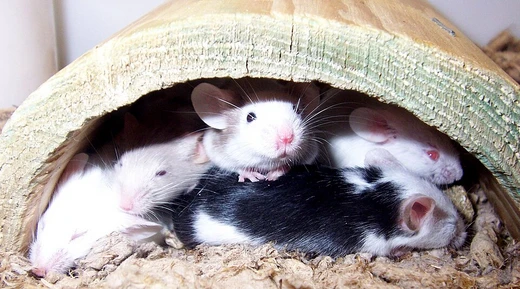
Vole
Small rodents known for rapid breeding and serving as prey.

Voles are small rodents, relatives of lemmings and hamsters, but with a stouter body, a longer hairy tail, a rounder head, smaller eyes and ears, and distinct molars that are high-crowned with angular cusps rather than low-crowned with rounded ones. They are sometimes called meadow mice or field mice. Depending on the species, voles grow to 8–23 cm (3–9 in) long. In the wild, most voles live no more than 16 months, though in captivity they can reach three years. Their mating season runs from spring to fall, with litters produced monthly. Each litter typically has two to nine offspring. Gestation lasts three weeks, and young voles reach sexual maturity in a month. Voles resemble moles, gophers, mice, rats, and shrews in appearance and behavior. They feed mainly on small plants but, like shrews, will eat dead animals, and like mice and rats, they can survive on almost any nut or fruit. Voles target plants more heavily than most small animals, often girdling small trees and ground cover much like a porcupine, which can kill young plants and harm shrubs. They consume their own body weight in plant material daily. Their most noticeable activity is burrowing under plants to reach bulbs and roots, and they also eat herbaceous material until the plant dies. Large infestations are often only noticed after significant plant damage. However, like other burrowing rodents, voles help disperse nutrients through the upper soil layers. Many predators eat voles, including martens, owls, hawks, falcons, coyotes, bobcats, foxes, raccoons, squirrels, snakes, weasels, domestic cats, and lynxes. Vole bones appear in the pellets of short-eared owls, northern spotted owls, saw-whet owls, barn owls, great gray owls, and northern pygmy owls. For smaller vole species, average lifespan is three to six months, rarely exceeding 12 months. Larger species, like the European water vole, live longer and usually die during their second or third winter. Up to 88% of voles die within their first month. The prairie vole is a notable animal model for monogamous social fideli
- size
- 8–23 cm (3–9 in) depending on species
- lifespan
- Most voles do not exceed 16 months in the wild; up to 3 years in captivity
- gestation
- Three weeks
- litter_size
- 2 to 9 offspring
- sexual_maturity
- One month
- subfamily
- Arvicolinae
Lore & Background
Voles are small rodents that grow to 8–23 cm, depending on the species. Most voles do not exceed 16 months in the wild, though in captivity they may live as long as three years. The vole mating season spans about half the year, from spring to fall, with litters produced monthly. Each litter is usually made up of two to nine offspring. Gestation lasts for three weeks and the young voles reach sexual maturity in a month. As a result of this biological exponential growth, vole populations can grow very large within a short time. Voles thrive on small plants yet, like shrews, they will eat dead animals and, like mice and rats, they can live on almost any nut or fruit. In addition, voles target plants more than most other small animals, making their presence evident. Voles readily girdle small trees and ground cover much like a porcupine. This girdling can easily kill young plants and is not healthy for trees and other shrubs. Voles consume their own body weight in plant material every 24 hours. Their most noticeable activity is burrowing under plants where they can access nutritious bulbs and root systems. Many predators eat voles, including martens, owls, hawks, falcons, coyotes, bobcats, foxes, raccoons, squirrels, snakes, weasels, domestic cats and lynxes. Vole bones are often found in the pellets of several owl species.
Reader's Guide
Voles are significant as a keystone prey species in many ecosystems, supporting a wide range of predators from owls and hawks to foxes and coyotes. Their rapid reproductive cycle allows populations to surge quickly, which can have major impacts on vegetation and agriculture, as they girdle trees and consume large amounts of plant material. However, they also play beneficial roles, such as dispersing nutrients throughout the upper soil layers. In science, voles have become important model organisms for studying social behavior, particularly monogamy and empathy. Additionally, the 'vole clock' method uses vole teeth to date archaeological strata. Voles also exhibit unusual chromosomal traits, including species with 17 to 64 chromosomes and, in one species, the loss of the Y chromosome entirely.
Did You Know?
- Voles consume their own body weight in plant material every 24 hours.
- The prairie vole is a notable animal model for its monogamous social fidelity.
More in Rodents And Small Mammals 1-18
Spotted an error? Know more?
This is a living reference — every entry is fact-audited, and reader corrections feed straight into our audit queue. Suggest an edit · See this site's audit record