Ground squirrel
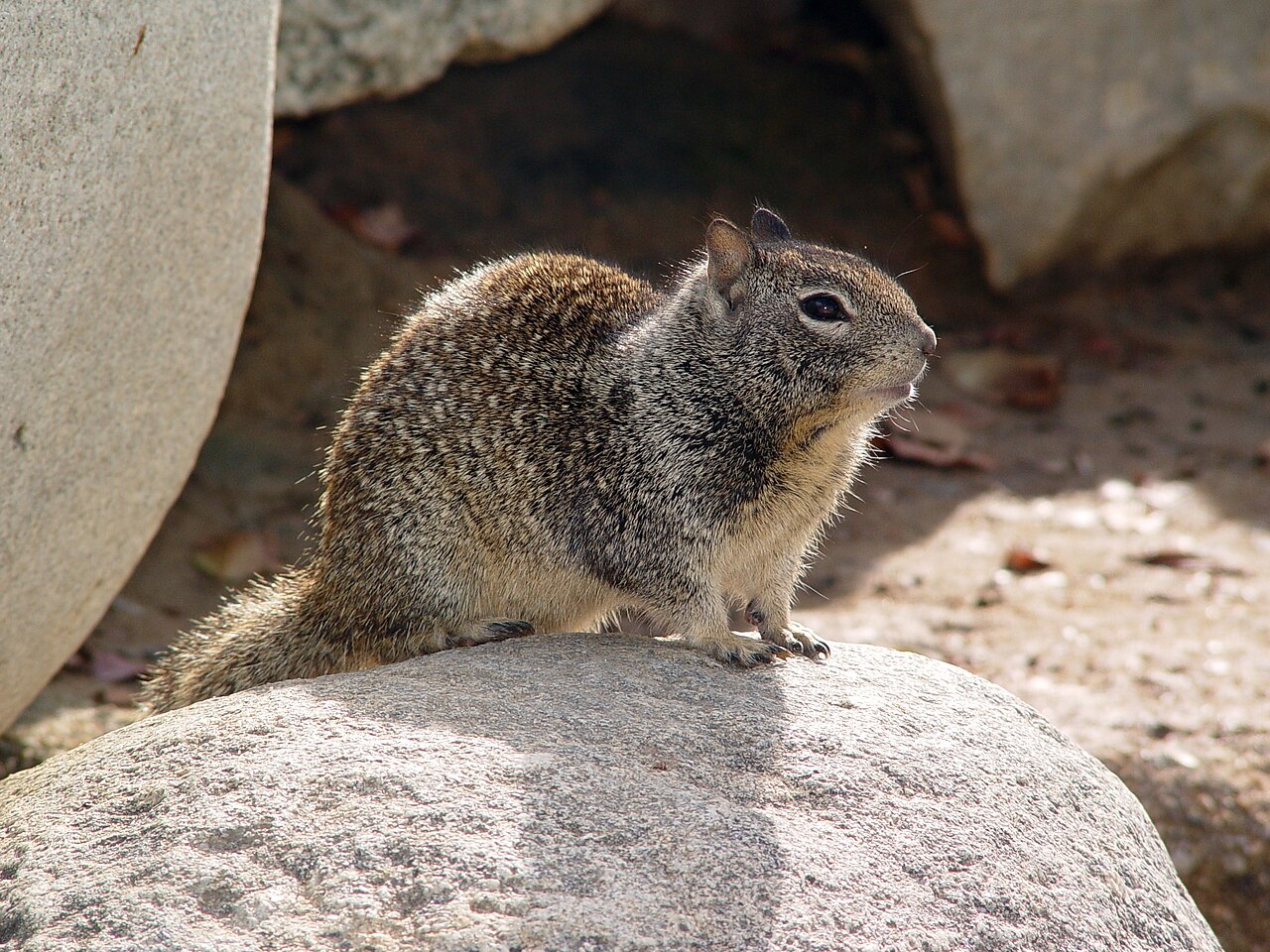
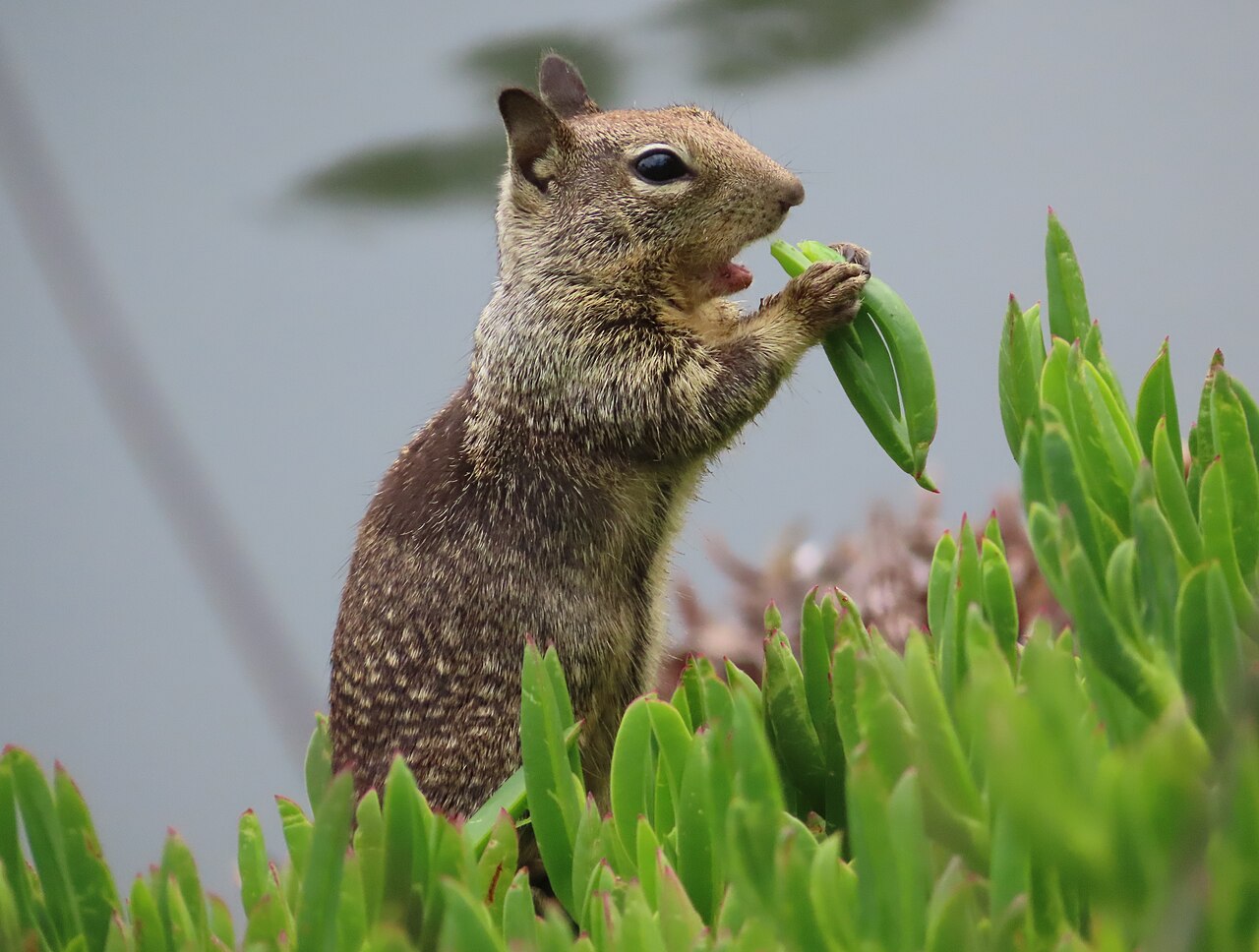
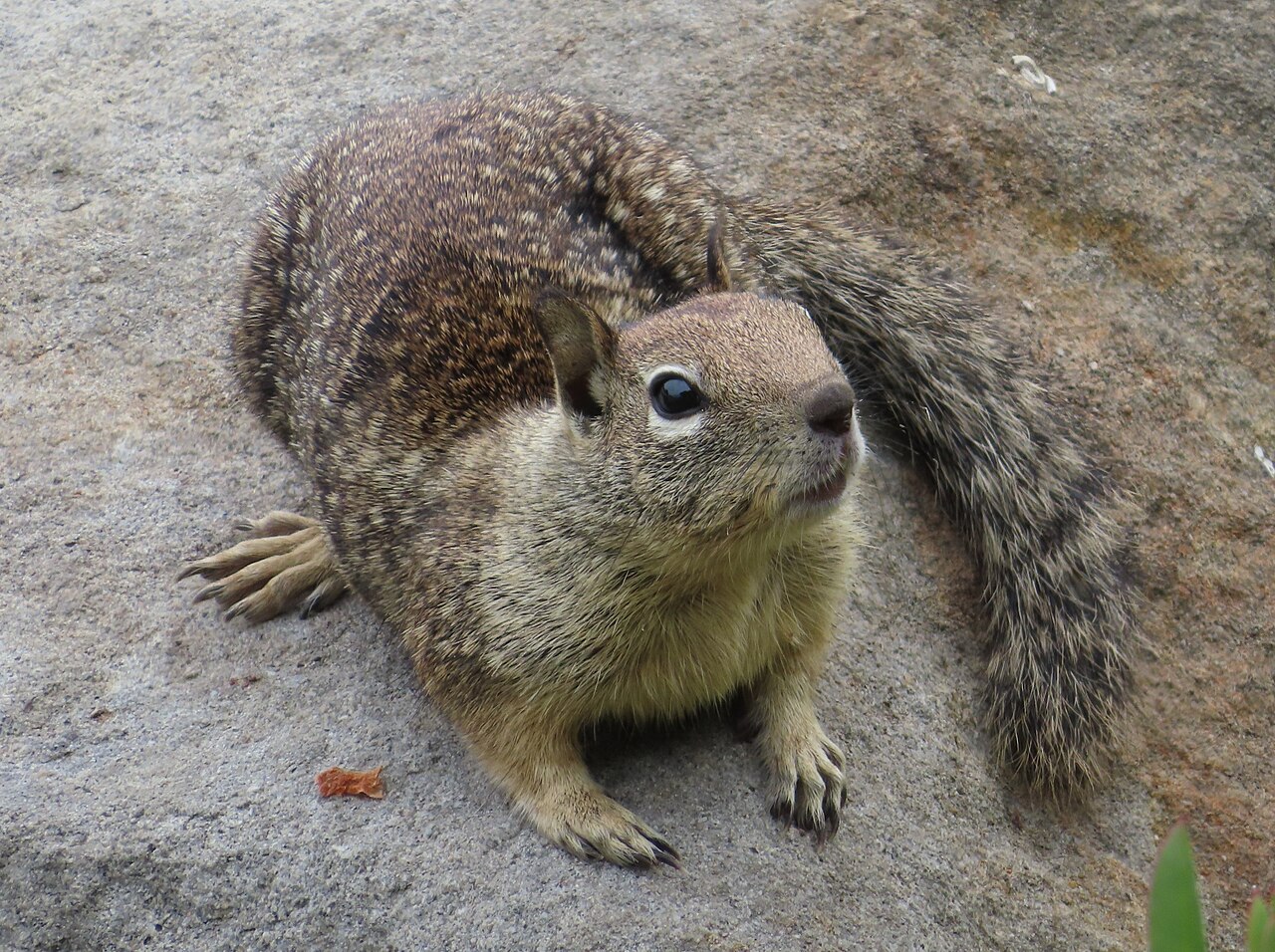
Ground squirrels are burrowing rodents of the marmot tribe.

Pat Hansen · CC BY-SA 4.0
Ground squirrels are a type of rodent belonging to the squirrel family, Sciuridae, but unlike tree squirrels, they spend most of their time on the ground or in burrows. The term typically refers to the medium-sized members of this group; the larger ones are called marmots or prairie dogs, while the smaller, less bushy-tailed varieties are known as chipmunks. These animals form the marmot tribe, Marmotini, which is a branch of the larger, mostly ground-dwelling squirrel subfamily Xerinae and includes six living genera. Familiar species in this widespread Holarctic group include marmots (such as the American groundhog), chipmunks, susliks, and prairie dogs. Their size and build vary greatly, but a common trait is their ability to stand upright on their hind legs for long stretches. They are also generally more social than other squirrels, often living in colonies with intricate social systems. Most Marmotini are large, short-tailed squirrels; some marmots can weigh up to 8 kg (18 lb) or more, making them the heaviest squirrels. Chipmunks of the genus *Tamias* do climb trees frequently and are closer to typical squirrels in other ways, so they are sometimes placed in their own tribe, Tamiini.
**Evolution and systematics**
The oldest known ground squirrel species is *Palaeosciurus* from Europe, which doesn’t seem closely related to any of the two or three living Marmotini lineages. Its fossils date back to the Early Oligocene, over 30 million years ago, and the genus likely lasted until the mid-Miocene, around 15 million years ago. Where Marmotini first evolved is uncertain. The various subtribes probably split apart in the early to mid-Oligocene, since primitive marmots and chipmunks appear in the Late Oligocene fossil record of North America. The fossil record for “true” ground squirrels is sparser, starting only in the mid-Miocene, when modern susliks and prairie dogs already lived in their current ranges. Whether Marmotini moved between North America and Eurasia by island-hopping across the Bering Straits or Greenland (both temperate at the time), which continent they came from, or if each continent produced its own subtribes that later spread, remains unknown and likely requires more fossils to settle. Europe’s extensive fossil record, separated from Asia by the Turgai Sea during that period, lacks ancient Marmotini except for the uncertain *Palaeosciurus
- Scientific classification
- Tribe Marmotini, subfamily Xerinae, family Sciuridae
- Size range
- 7.2 inches (18 cm) to nearly 30 inches (76 cm) in height
- Diet
- Omnivorous: fungi, nuts, fruits, seeds, occasionally insects, eggs, and small animals
- Habitat
- Open areas including rocky outcrops, fields, pastures, sparsely wooded hillsides, grassy areas
- Defense mechanisms
- High-pitched warning calls and intricate burrow systems with multiple entrances
- Oldest known fossil
- Palaeosciurus from the Early Oligocene, more than 30 million years ago
Lore & Background
Ground squirrels are rodents of the squirrel family (Sciuridae) that generally live on the ground or in burrows. The term is most often used for the medium-sized ground squirrels, as the larger ones are more commonly known as marmots (genus Marmota) or prairie dogs, while the smaller and less bushy-tailed ground squirrels tend to be known as chipmunks (genus Tamias). Together, they make up the 'marmot tribe' of squirrels, Marmotini, a clade within the large and mainly ground squirrel subfamily Xerinae, and containing six living genera. Well-known members of this largely Holarctic group are the marmots (Marmota), including the American groundhog, the chipmunks, the susliks (Spermophilus), and the prairie dogs (Cynomys). They are highly variable in size and habitus, but most are remarkably able to rise up on their hind legs and stand fully erect comfortably for prolonged periods. They also tend to be far more gregarious than other squirrels, and many live in colonies with complex social structures. Most Marmotini are rather short-tailed and large squirrels. At up to 8 kg (18 lb) or more, certain marmots are the heaviest squirrels.
Reader's Guide
Ground squirrels are significant as a diverse and widespread group within the squirrel family, representing a major evolutionary lineage that adapted to terrestrial and burrowing lifestyles. Their complex social structures and colony living distinguish them from tree squirrels, and their ability to stand erect for prolonged periods is a notable behavioral adaptation. The tribe Marmotini includes ecologically important species such as marmots, prairie dogs, and chipmunks, which play roles in their ecosystems as prey and as engineers of burrow systems that affect soil and vegetation. The fossil record of ground squirrels extends back more than 30 million years to the Early Oligocene, with the oldest known species being Palaeosciurus from Europe. The origins of the group remain uncertain, with evidence suggesting possible East Asian or western North American origins and dispersal across the Bering region. Their expansion to Africa was likely prevented by competitive exclusion by related ground squirrels native to that continent. Ground squirrels' defense mechanisms—including alarm calls and intricate burrows—highlight their adaptation to predator-rich environments. Their omnivorous diet and habitat preferences for open areas make them common in grasslands, pastures, and parks, where they are often observed by humans.
Did You Know?
- Ground squirrels can stand fully erect on their hind legs for prolonged periods.
- The oldest known ground squirrel fossil, Palaeosciurus, dates from more than 30 million years ago.
- Certain marmots, a type of ground squirrel, can weigh up to 8 kg (18 lb) or more, making them the heaviest squirrels.
- Ground squirrels spend about one-third of their time standing to watch for predators.
Taxonomy & Deep Roots
Ground squirrels belong to the family Sciuridae, a diverse grouping of small to medium-sized rodents that also encompasses tree squirrels, flying squirrels, and their ground-dwelling cousins such as chipmunks and prairie dogs. This family's members are native to the Americas, Eurasia, and Africa, though human activity has carried them into Australia as well. Fossil evidence places the earliest known squirrels in the Eocene epoch, making them a remarkably ancient lineage within the rodent order. Among living rodent families, squirrels share their closest evolutionary ties with the mountain beaver and dormice. The very name "squirrel" traces back through Anglo-Norman and Old French to the Latin sciurus, which itself derives from the Ancient Greek skiouros—a compound of words meaning "shade" and "tail," a nod to the bushy appendage characteristic of many members. In older English, the animal was called ācweorna, a Common Germanic term that gave rise to cognates still spoken across Scandinavia, the Netherlands, and Germany. A gathering of these animals is traditionally termed a "dray" or a "scurry."
Colonial Life & Reproductive Cycles
One of the most distinguishing traits of ground squirrel species is their strong social orientation. Unlike their more solitary tree-dwelling relatives, ground squirrels typically organize themselves into well-developed colonies, creating structured communities on the open ground. Their daily activity patterns lean toward diurnal or crepuscular rhythms, meaning they are most active during daylight hours or around dawn and dusk rather than in the deep of night. Reproduction follows a seasonal cadence: mating occurs either once or twice per year, followed by a gestation spanning roughly three to six weeks. Newborns arrive in an altricial state—completely naked, without teeth, and blind—relying entirely on their mother for survival. In most species, the female shoulders the full burden of raising the litter alone. The young are weaned between six and ten weeks of age and reach sexual maturity by the close of their first year. During sweltering stretches, ground squirrels have been observed splooting, pressing their bellies flat against cool surfaces to shed excess body heat.
Built for Survival: Anatomy & Senses
Ground squirrels are generally small, slender-bodied rodents whose most recognizable feature is a long, bushy tail paired with large eyes. Their hind limbs are characteristically longer than their forelimbs, and each foot bears either four or five toes with soft undersurface pads and sturdy, versatile claws suited for grasping and climbing. Their fur tends to be soft and silky, though thickness varies considerably between species, and coat coloration is highly variable both across and even within a single species. Vision is a primary sense, complemented by a well-developed sense of touch through vibrissae on both the head and the limbs. The dental arrangement follows the classic rodent blueprint: large incisors that continue growing throughout life, set well ahead of grinding cheek teeth separated by a wide gap called a diastema. The tail serves multiple critical roles—shielding the body from rain, wind, and cold; acting as a radiator to pump blood and cool the animal in heat; providing counterbalance during leaps; functioning as a parachute; and serving as a visual signal to other squirrels. When a squirrel sits upright with its tail folded along its back, the silhouette can mask the typical small-mammal outline from predators approaching from behind.
Habitat, Diet & the Fragility of Survival
Ground squirrels inhabit an astonishing range of environments, from tropical rainforests to semiarid deserts, avoiding only the high polar regions and the most arid stretches of desert. Their diet is predominantly herbivorous, centered on seeds and nuts, though many individuals will supplement with insects and even small vertebrates when available. To buffer against periods of scarcity, squirrels employ species-specific food-caching strategies. In temperate zones, they commonly bury nuts beneath leaf litter, tuck them into hollow trees, or stash them underground. In subtropical and humid climates, however, traditional ground caching risks mold, decomposition, or premature germination, so some squirrels hang nuts or mushrooms on tree branches to keep them dry. This behavior inadvertently aids certain tree species in expanding their range, as forgotten or dislodged nuts can sprout in new locations. Despite their adaptability, squirrel life is fragile: many juveniles perish in their first year, and adults in the wild typically live five to ten years, though captivity can extend that to two decades. A falling nest can be fatal for a litter, and while wildlife rehabilitators sometimes rescue orphaned young, the constant care required means many are unfortunately euthanized instead.
Gallery
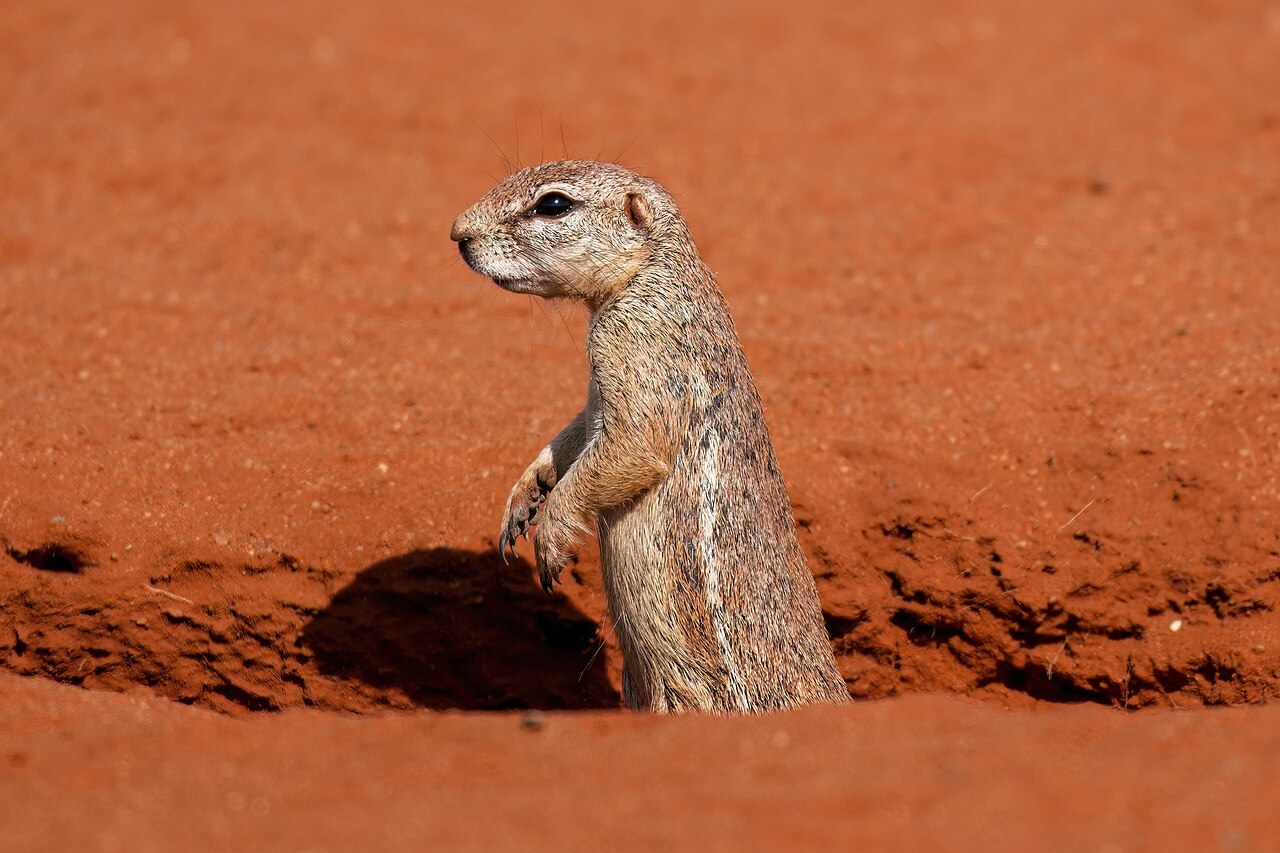
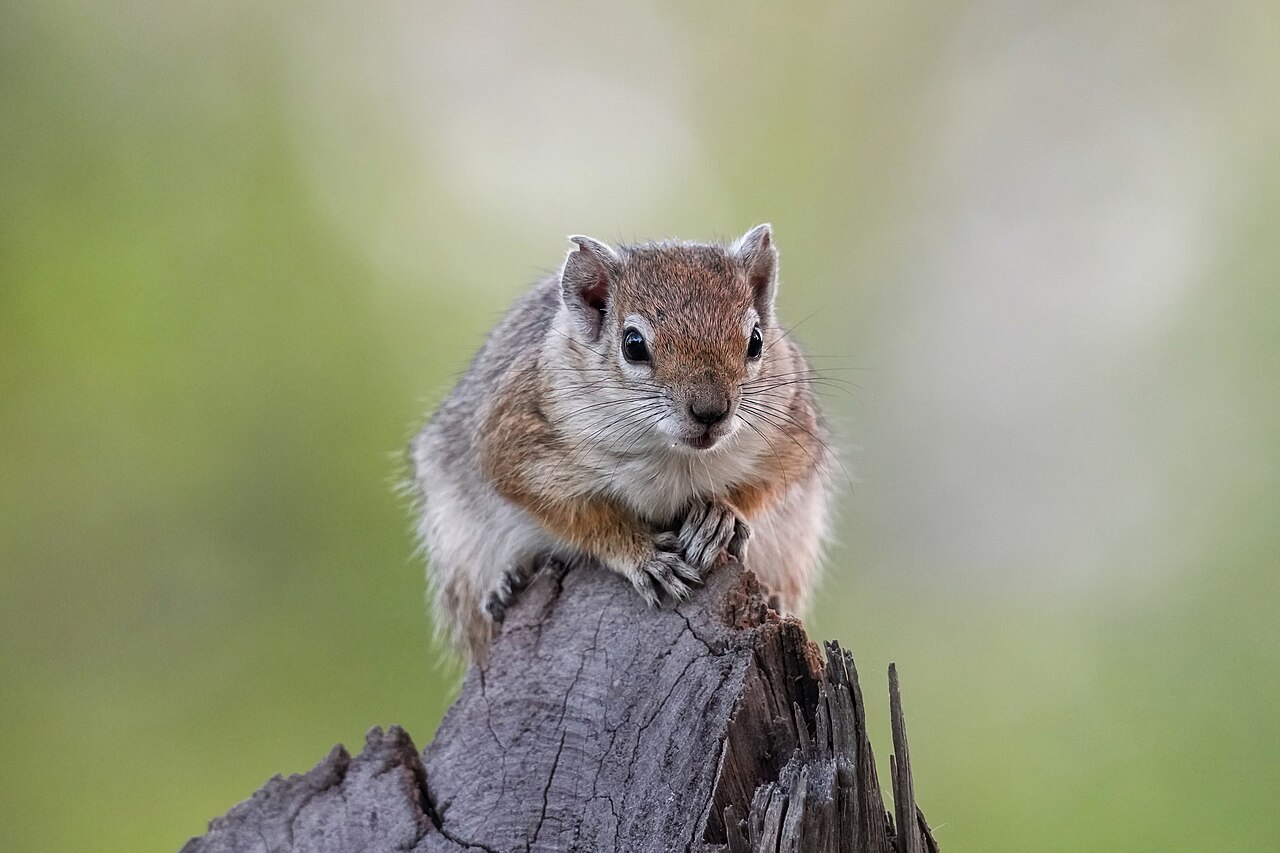
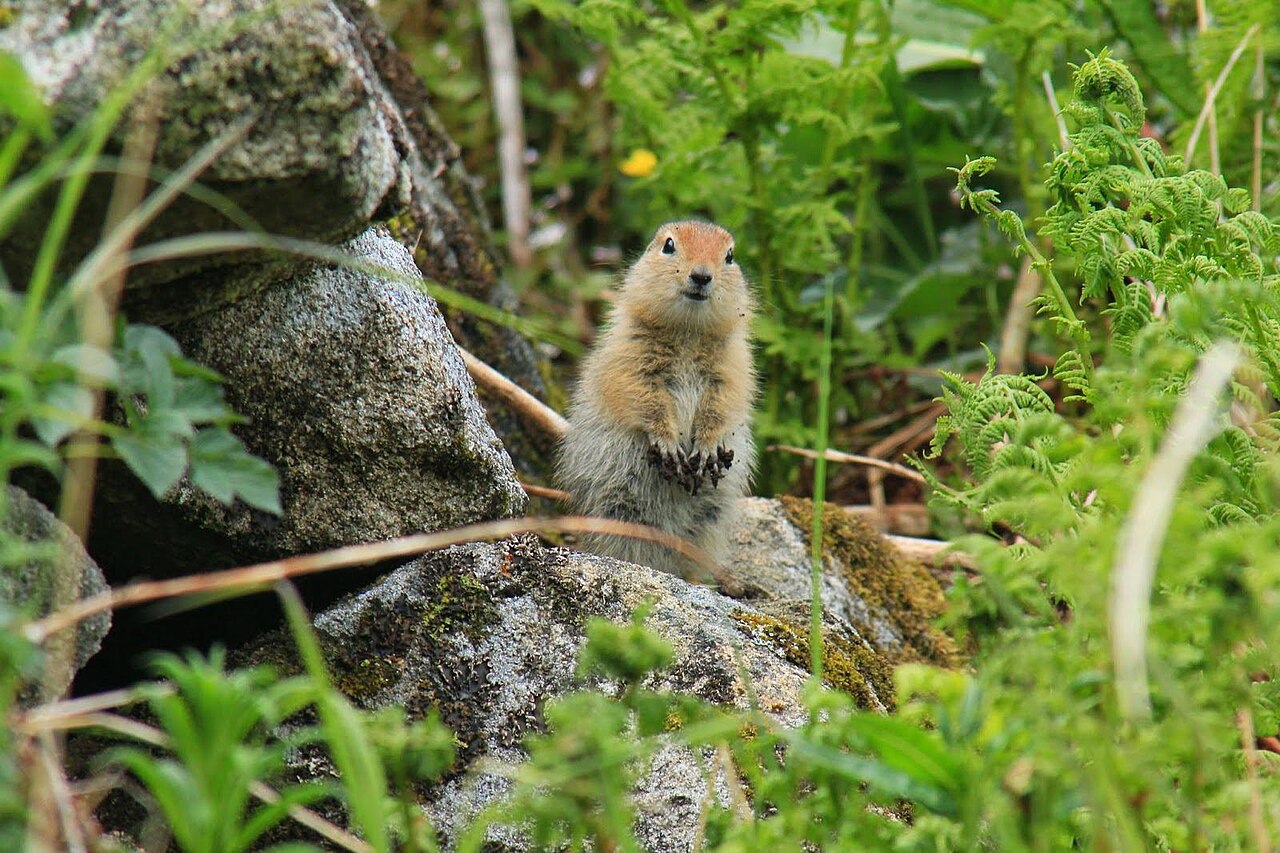
Frequently Asked Questions
What exactly is a ground squirrel?
A ground squirrel is a medium-sized member of the squirrel family (Sciuridae) that, unlike its arboreal relatives, lives primarily on the ground or in underground burrows. They belong to the tribe Marmotini within the ground-dwelling subfamily Xerinae and span six living genera across the Holarctic region.
How large can ground squirrels grow?
Depending on the species, ground squirrels range from about 7.2 inches (18 cm) up to nearly 30 inches (76 cm) in body length. This size band distinguishes them from the smaller chipmunks below and the larger marmots and prairie dogs above.
What's in a ground squirrel's diet?
Ground squirrels are omnivorous, feeding on fungi, nuts, fruits, and seeds as their staples. They will also opportunistically eat insects, eggs, and small animals when the chance arises.
How do ground squirrels defend themselves from predators?
Their primary defense involves emitting high-pitched warning calls to alert the group and retreating into complex burrow systems that feature multiple entrances. These tunnel networks make it difficult for predators to corner the animals.
Where do ground squirrels typically live?
Ground squirrels favor open environments such as rocky outcrops, fields, pastures, sparsely wooded hillsides, and grassy areas. As a Holarctic group, their range stretches broadly across the northern continents.
More in Rodents And Small Mammals 1-18
Spotted an error? Know more?
This is a living reference — every entry is fact-audited, and reader corrections feed straight into our audit queue. Suggest an edit · See this site's audit record