Flying squirrel
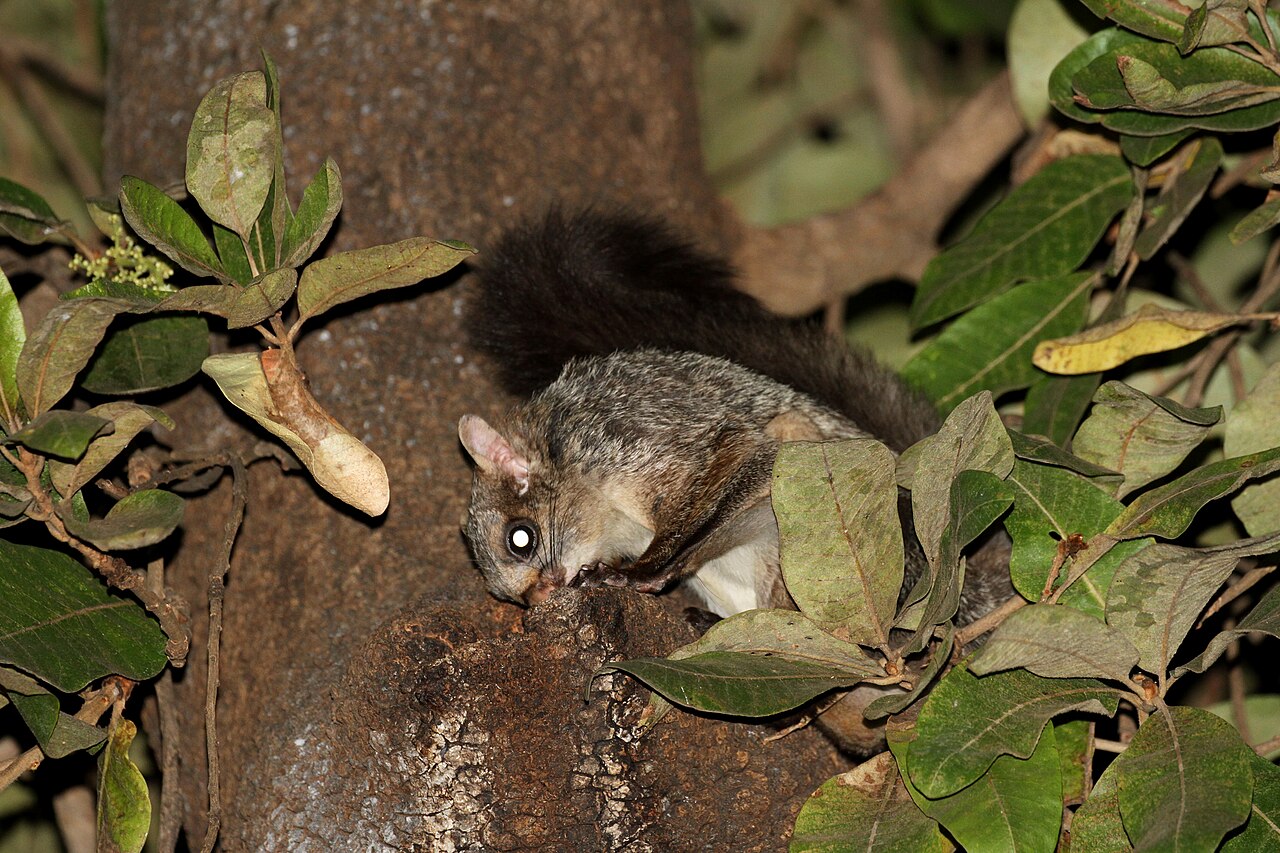
Gliding squirrels that steer with limbs and tail.

John Manard · CC BY-SA 4.0
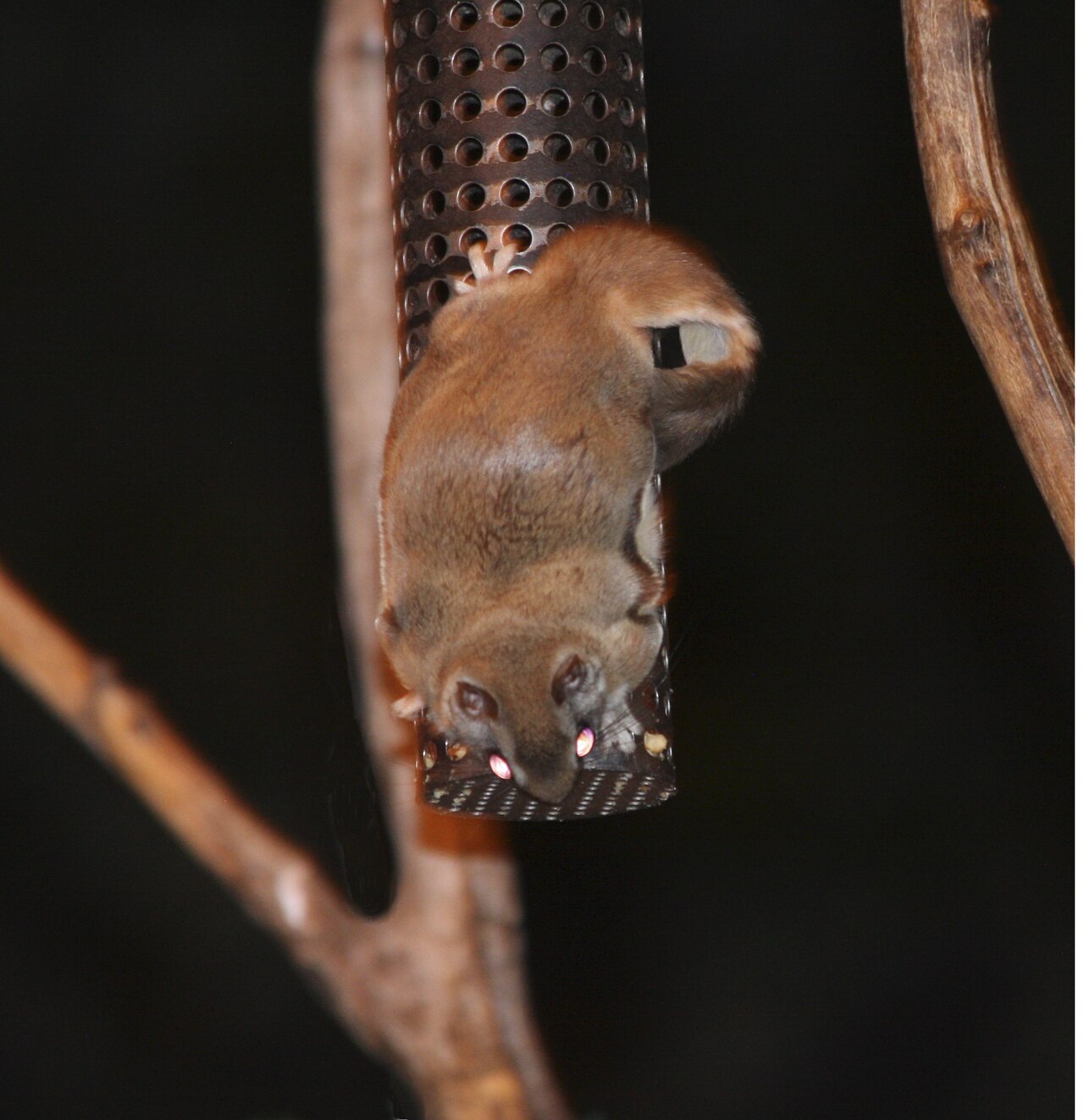
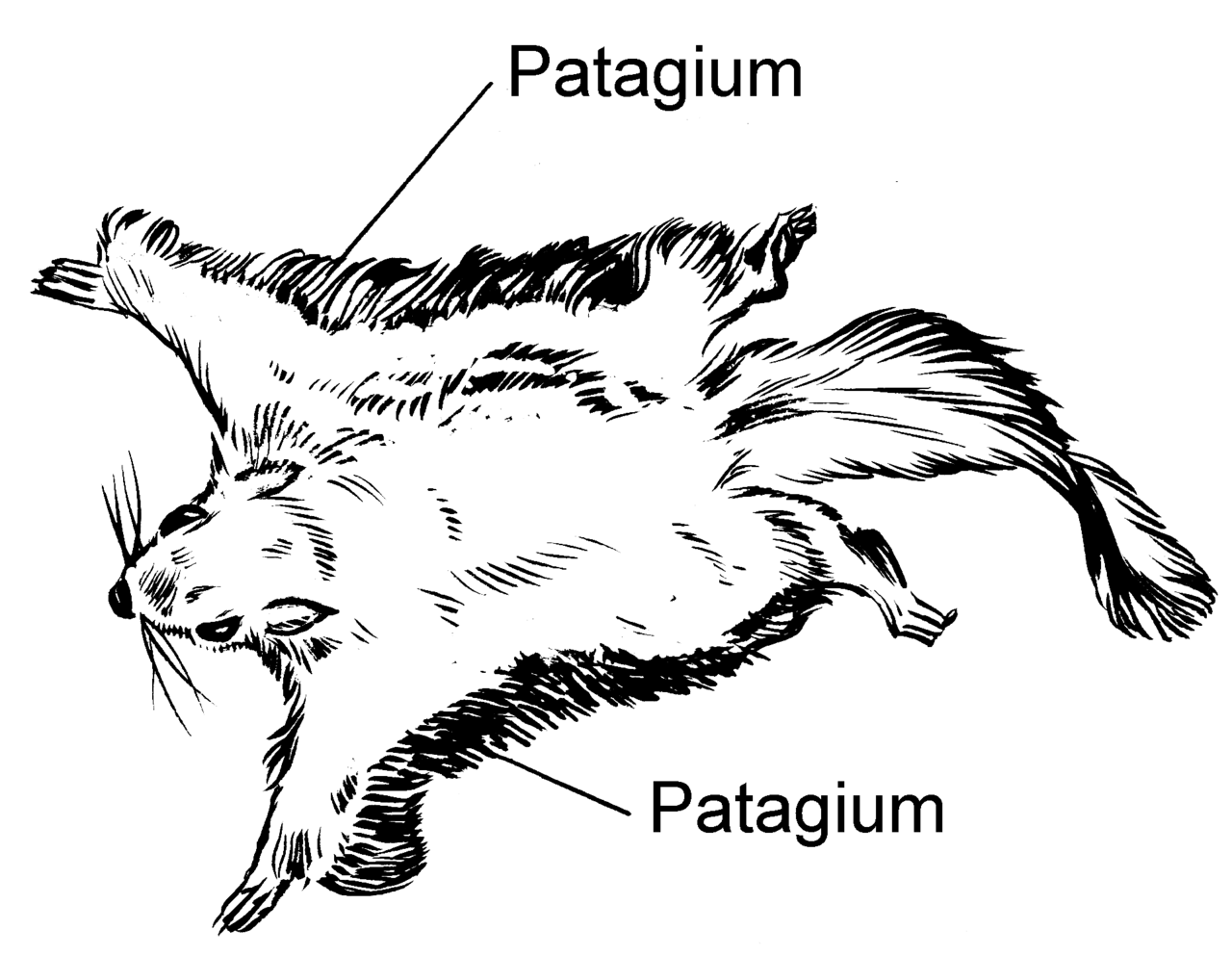
Flying squirrels are a tribe of 50 species of squirrels in the family Sciuridae, known scientifically as Pteromyini or Petauristini. Despite their name, they are not capable of full flight like birds or bats but glide between trees using a furred skin membrane called a patagium that stretches from wrist to ankle. Their long tails provide stability during glides, and they can steer and control their glide path with their limbs and tail. Molecular studies show they are monophyletic, originating 18–20 million years ago, with the earliest lineage, Paracitellus, dating to the late Oligocene.
- Earliest lineage
- Paracitellus (late Oligocene)
Lore & Background
Flying squirrels are anatomically similar to other squirrels but have adaptations for gliding: longer limb bones and shorter hand, foot, and distal vertebrae. They use a specialized cartilage projection from the wrist, present only in flying squirrels, to control a wing tip that adjusts to various angles during flight. The patagium, a furry parachute-like membrane, stretches from wrist to ankle, and the tail acts as an adjunct airfoil and air brake before landing. Flights of up to 90 meters have been recorded. Most flying squirrels are nocturnal and omnivorous, eating fruit, seeds, insects, fungi, bird eggs, tree sap, and young birds. Young are born naked and helpless in a nest, cared for by their mother, and begin practicing gliding at five weeks, leaving the nest by ten weeks. The Humboldt's flying squirrel was not included in that study, so only two species were confirmed. The purpose of this fluorescence remains unknown.
Reader's Guide
Flying squirrels represent a significant evolutionary adaptation for arboreal locomotion, allowing efficient travel between trees without descending to the ground. Their gliding mechanism, involving a patagium and specialized wrist cartilage, provides stability and control, reducing energy expenditure and aiding predator avoidance. Molecular studies have clarified their evolutionary history, showing they are monophyletic and closely related to tree squirrels, with morphological differences revealing adaptations to minimize wing loading and increase maneuverability. Hypotheses for the evolution of gliding include energy efficiency in foraging, predator escape, and injury prevention during leaps. The discovery of UV fluorescence in North American species adds an intriguing, unexplained dimension to their biology. Their distribution spans North and Central America, Asia, and parts of northeast Europe, with 15 recognized genera. As both wild animals and occasional domesticated pets, flying squirrels illustrate the diversity within the squirrel family and the complex interplay of form, function, and environment in mammalian evolution.
Did You Know?
- Flying squirrels are not capable of full flight like birds or bats; they glide using a patagium membrane.
- They can steer and control their glide path with their limbs and tail, with flights recorded up to 90 meters.
- Some captive-bred southern flying squirrels have become domesticated as small household pets called 'pocket pets.'
The Art of the Glide
Flying squirrels share a name that is, strictly speaking, a misnomer. These 50 species of gliding mammals cannot generate the kind of powered flight seen in birds or bats. Instead, they rely on a furred membrane called the patagium, stretching from wrist to ankle, to sail between trees. What makes their aerial control remarkable is a small cartilaginous projection at the wrist—the styliform cartilage—found only in flying squirrels among gliding mammals. Researchers believe this structure is homologous to carpal bones in other squirrels, and together with the hand it forms an adjustable wing tip. By shifting the angle of this tip and altering tension on the patagium, the squirrel can steer, change speed, and even correct a miscalculated leap mid-air. The fluffy tail, flattened from back to front, serves as an auxiliary airfoil and an air brake just before touchdown. Recorded glides have reached 90 metres, while longer limb bones and shortened hand, foot, and tail vertebrae work together to reduce wing loading and boost maneuverability. The trade-off: these squirrels are poorly suited to ordinary four-legged running.
Deep Roots: A 20-Million-Year Story
For much of the twentieth century, the evolutionary origins of flying squirrels remained a matter of heated debate among biologists. Two landmark molecular studies in the early 2000s finally brought clarity, confirming that the group is monophyletic—meaning every living flying squirrel descends from a single common ancestor that had no non-flying offshoots. That ancestor is estimated to have appeared roughly 18 to 20 million years ago, during the late Oligocene, with the genus Paracitellus representing the oldest surviving lineage. The same studies revealed a sister-group relationship between flying squirrels and ordinary tree squirrels, a close kinship that makes the anatomical differences between the two especially informative. Compared with similarly sized tree squirrels, flying squirrels show elongated lumbar vertebrae and forearms alongside shortened hands, feet, and distal tail bones—proportions that minimize wing loading and boost aerial agility. Several hypotheses have been proposed for why gliding evolved in the first place: energy-efficient foraging across a wider canopy, rapid escape from predators, and a safer alternative to high-impact leaps, all of which the patagium and tail-based braking system address elegantly.
Nocturnal Foragers and Nest-Bound Beginnings
Most of the 50 recognized species in the tribe Pteromyini (also called Petauristini) are active at night and eat an impressively varied diet. Their meals can include fruit, seeds, flower buds, blossoms, insects, snails, spiders, fungi, tree sap, bird eggs, and even young birds, making them true omnivores. New World species are grouped under the genus Glaucomys, whose name translates to 'gleaming mouse,' while Old World species fall under Pteromys, meaning 'winged mouse.' Life begins in a nest where the newborns are born completely naked and helpless. The mother takes sole responsibility for their early care. By around five weeks of age, the young are developmentally ready to begin practicing their gliding skills, a critical milestone that bridges the gap between nest-bound infancy and independent canopy life. At roughly ten weeks, a young flying squirrel is considered ready to leave the nest entirely and forage on its own. This rapid developmental timeline underscores how essential the gliding apparatus is to survival from the very start of independent life.
Glowing in the Dark and Living in the Home
In 2019, a serendipitous observation revealed that a flying squirrel glowed a vivid pink when exposed to ultraviolet light. Follow-up research by biologists at Northland College in northern Wisconsin confirmed that all three North American flying squirrel species share this fluorescent trait, a quality entirely absent in their non-flying squirrel relatives. To this day, no definitive biological purpose for the fluorescence has been identified, leaving it one of the species' most intriguing unsolved mysteries. Beyond the wild, flying squirrels have found a secondary life in human households. Some captive-bred southern flying squirrels have been domesticated and kept as small 'pocket pets,' a role that highlights their compact size and manageable temperament. It is also worth noting that other gliding mammals—colugos, and the families Petauridae and Anomaluridae—achieved a similar patagium-based gliding ability through convergent evolution rather than shared ancestry, making the flying squirrel's gliding apparatus a remarkable parallel solution to the same aerial challenge.
Gallery


Frequently Asked Questions
What is a flying squirrel?
Flying squirrels are a tribe of roughly 50 squirrel species belonging to the family Sciuridae, grouped under the scientific name Pteromyini or Petauristini. They are set apart from other squirrels by their specialized ability to glide between trees using a furred skin membrane.
Can flying squirrels actually fly?
No, they are not true fliers like birds or bats and cannot generate sustained lift. They spread a membrane called a patagium from wrist to ankle and glide downward between trees rather than flapping.
How do flying squirrels steer while gliding?
Their long tail acts as a stabilizer to keep them balanced in the air. They also adjust their limbs to change direction and control the trajectory of each glide.
How old is the flying squirrel lineage?
Molecular research indicates the group is monophyletic, meaning every living species descends from a single common ancestor that emerged roughly 18 to 20 million years ago.
What is the earliest known flying squirrel species?
The oldest identified lineage is Paracitellus, which dates to the late Oligocene epoch. It represents the most ancient branch in the flying squirrel evolutionary tree.
More in Rodents And Small Mammals 1-18
Spotted an error? Know more?
This is a living reference — every entry is fact-audited, and reader corrections feed straight into our audit queue. Suggest an edit · See this site's audit record