Jerboa
Nocturnal bipedal desert rodents with exceptional hearing and hopping ability.

Free Public Domain Illustrations by rawpixel · CC BY 2.0
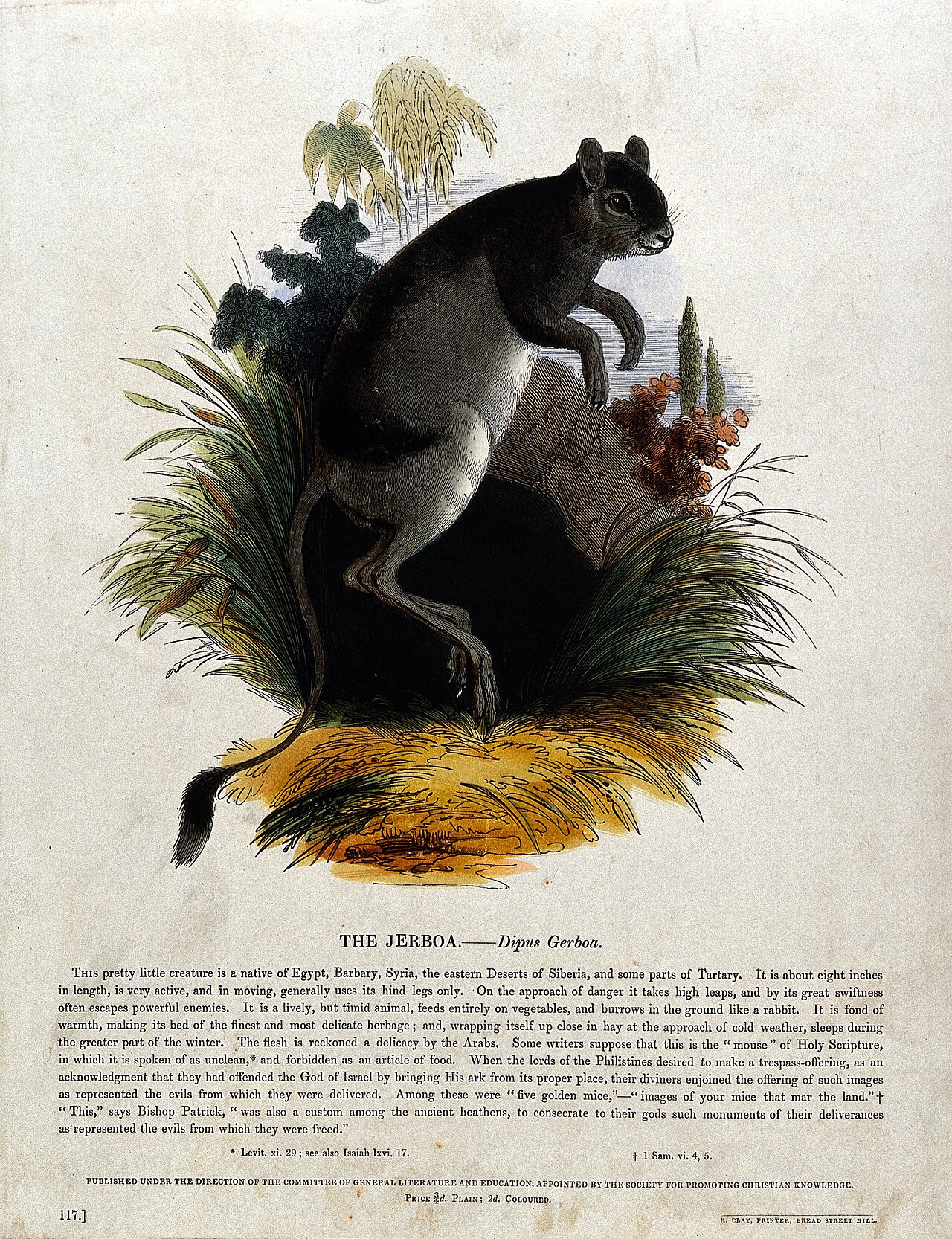
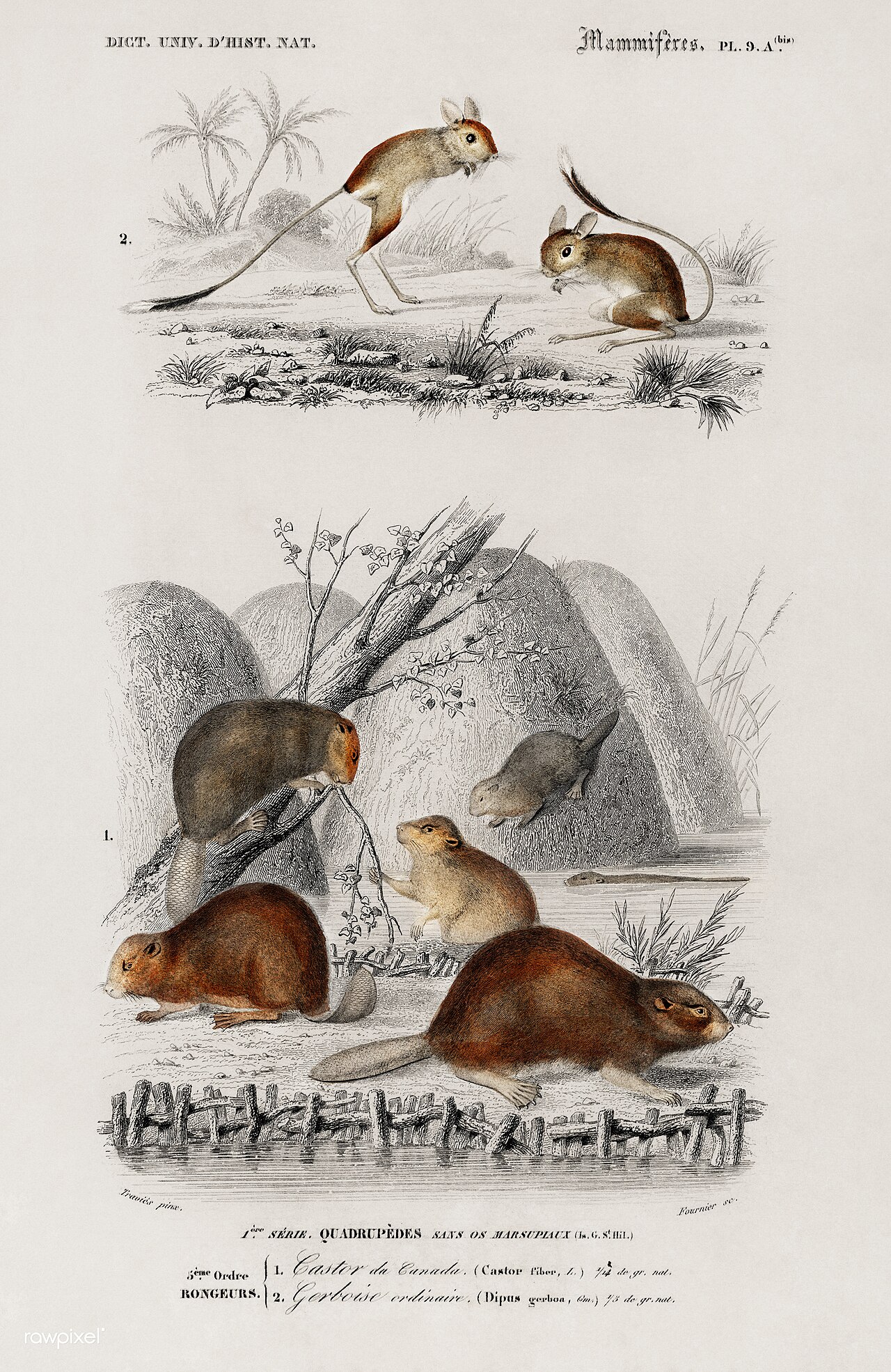
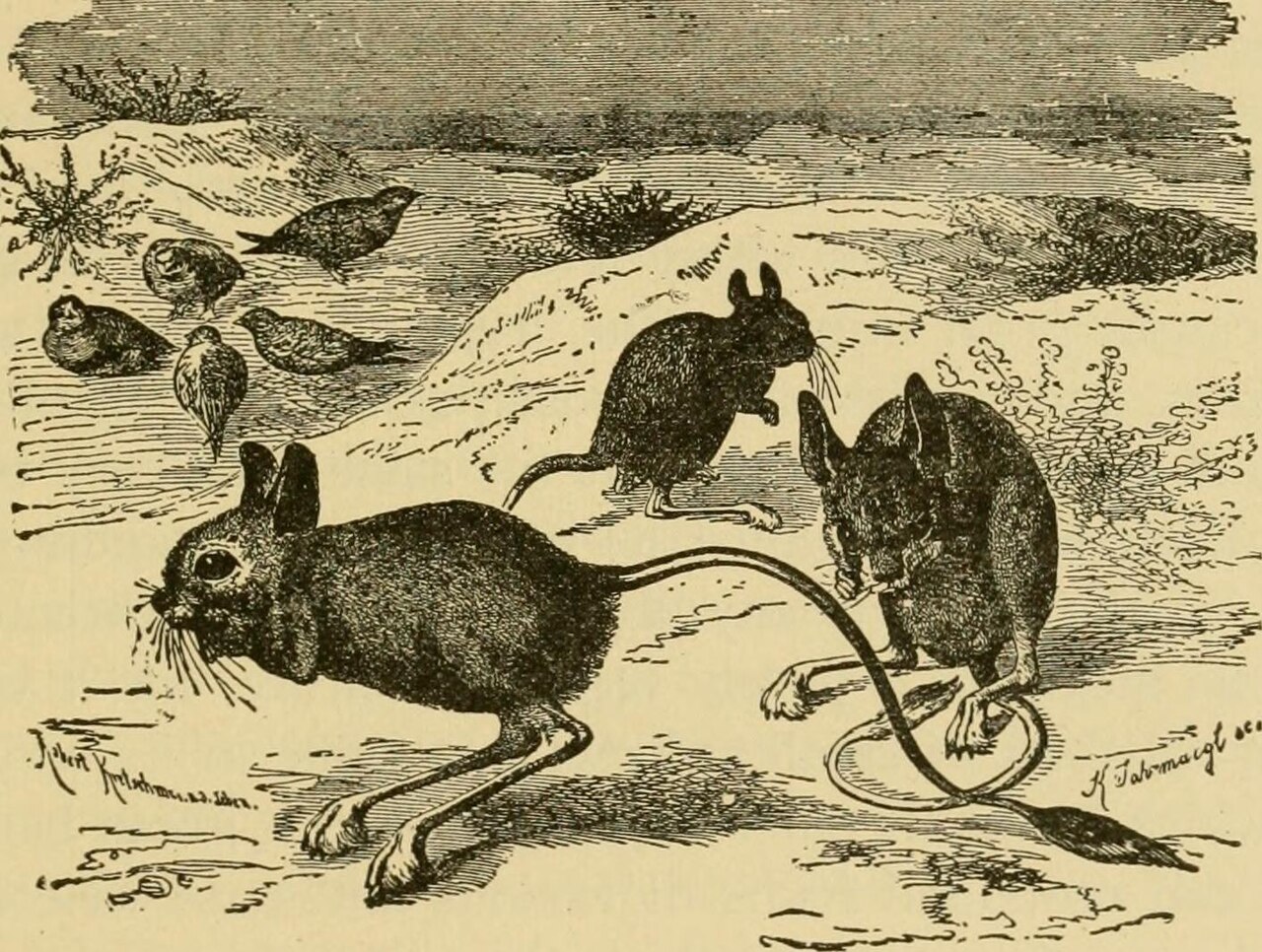
Jerboas are members of the family Dipodidae, nocturnal hopping desert rodents found throughout North Africa and Asia. They are notable for their bipedal locomotion, resembling miniature kangaroos, and their adaptations to hot desert environments.
- classification
- Family Dipodidae
- body_length
- 4–26 cm (1.6–10.2 in) plus tail 7–30 cm (2.8–11.8 in)
- top_speed
- 24 km/h (15 mph)
- lifespan
- 2–3 years
- diet
- Primarily plant material, some insects and soft seeds
- habitat
- Hot deserts of North Africa and Asia
Lore & Background
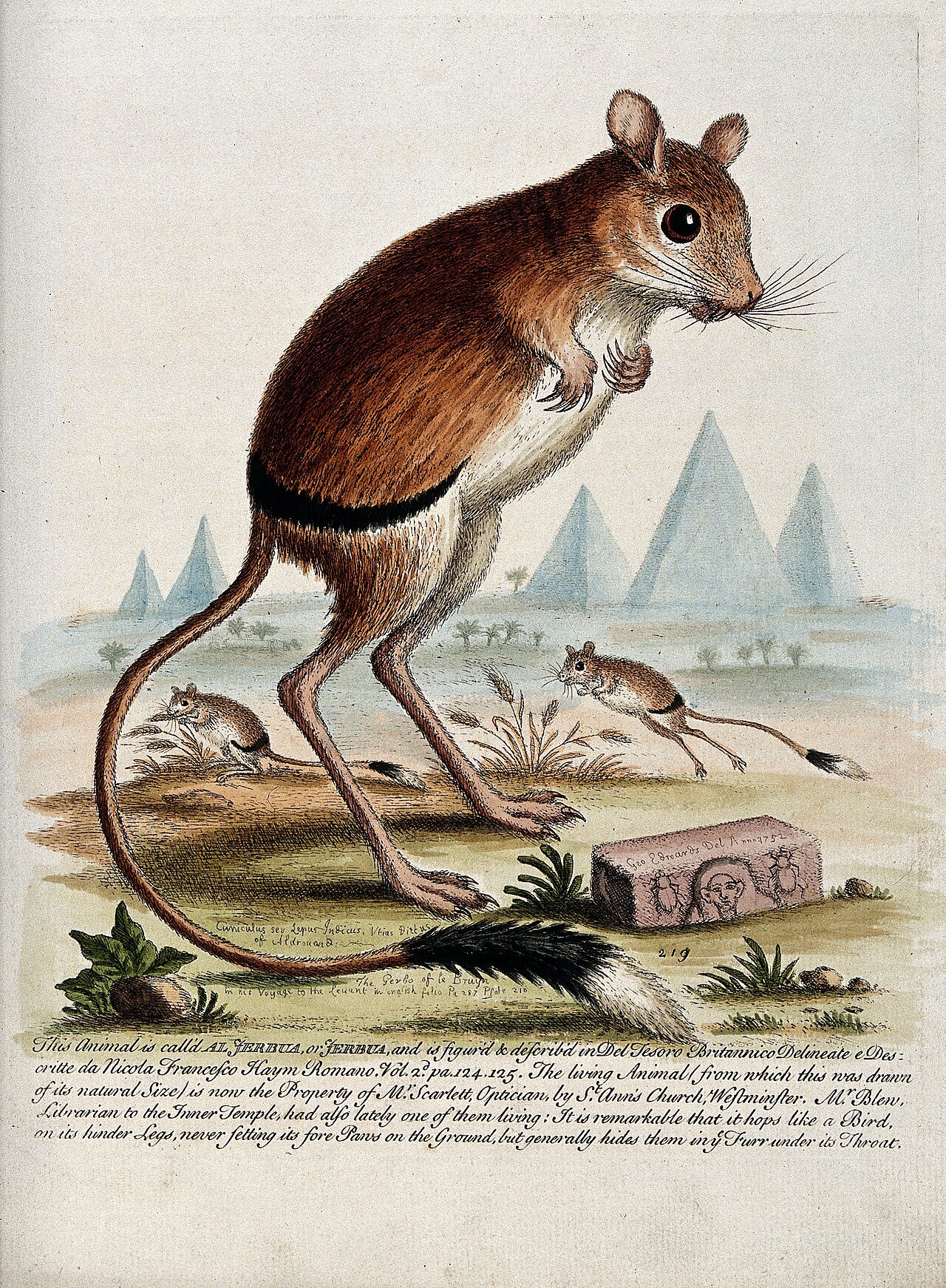
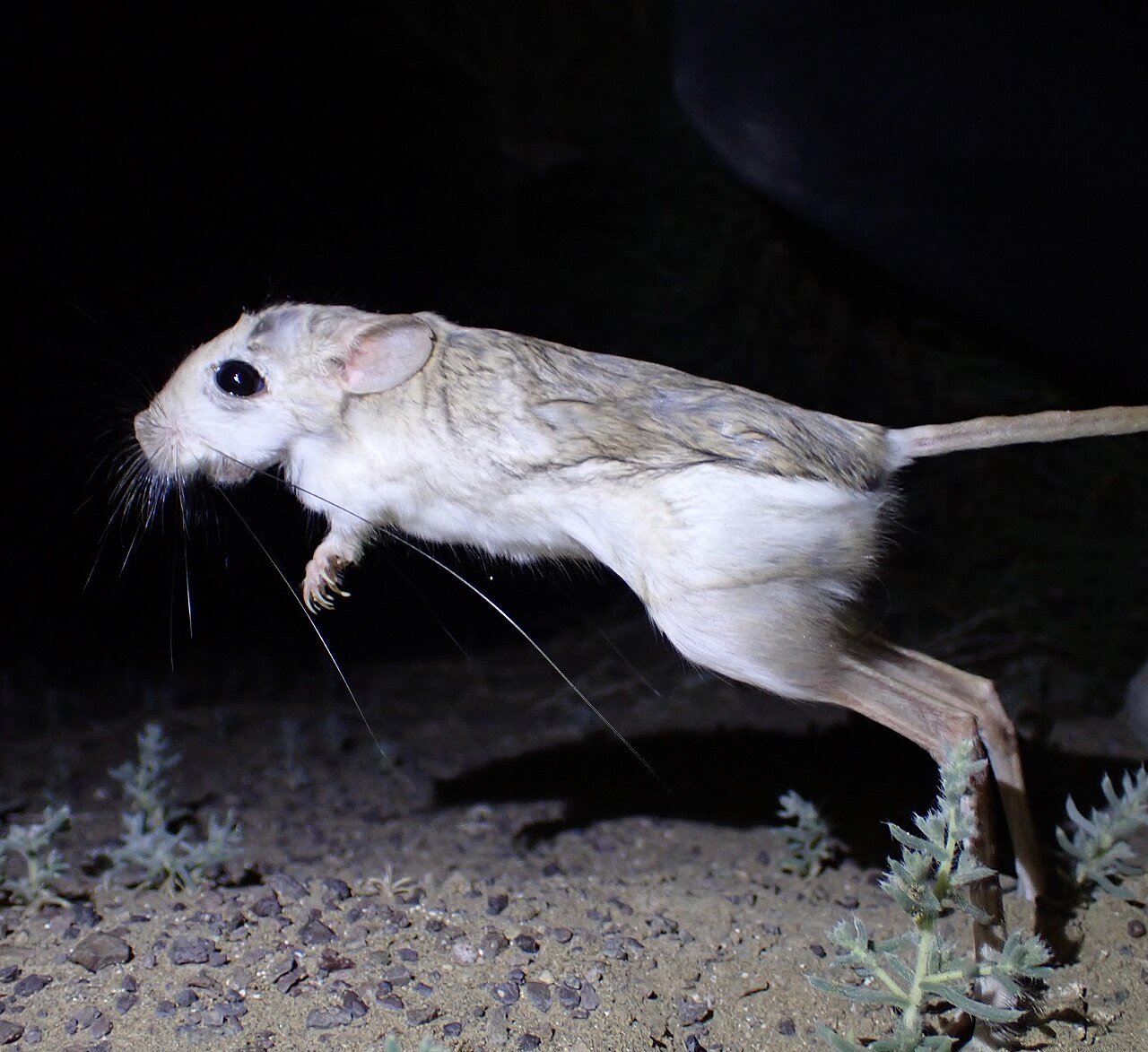
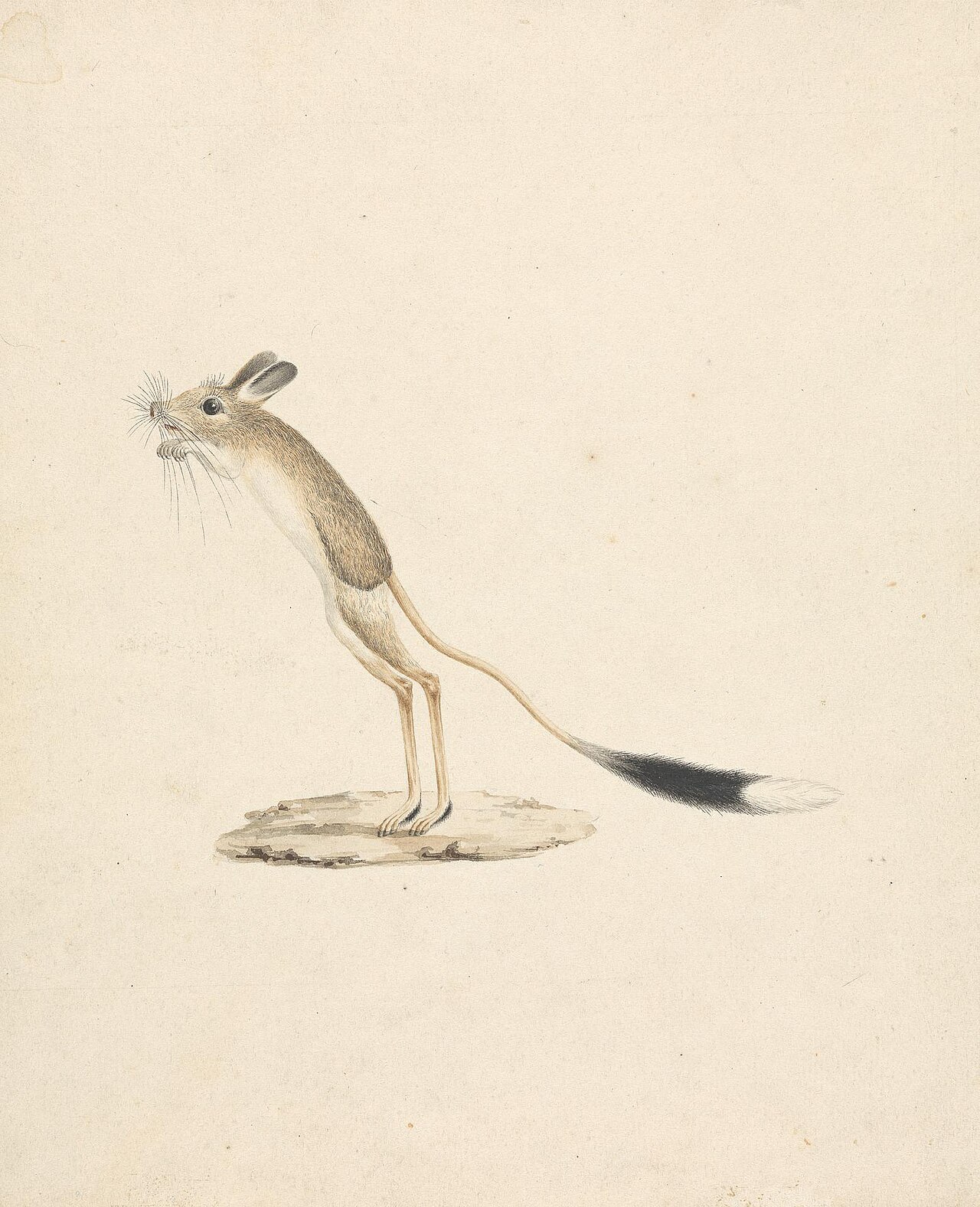
Jerboas are obligate bipeds, moving almost exclusively on two legs, unlike most other mammals. Their hind legs can be up to four times as long as their front legs, and their metatarsal bones are fused into a cannon bone that aids in jumping. When threatened, they can leap up to 3 meters (10 ft) and run at 24 km/h (15 mph). Their foramen magnum is forward-shifted, enhancing two-legged locomotion. Jerboas are crepuscular, sheltering in burrows during the heat of the day. They dig multiple burrow types: temporary summer and winter burrows, and permanent summer and winter burrows. Permanent winter burrows are longer and deeper, used for hibernation. They plug entrances to keep out hot air and predators. Their keen hearing helps them avoid nocturnal predators, and some species are preyed on by little owls in central Asia. Jerboas are solitary as adults, though loose colonies may form. They do not drink water, obtaining moisture from their food. Reproduction occurs after hibernation, with females breeding twice in summer, raising two to six young after a gestation of 25–35 days. Mating is likely polygynous, and gonadotropin-releasing hormone cells fire most from March through July.
Reader's Guide
Jerboas are significant as a prime example of convergent evolution with kangaroos, demonstrating how bipedal saltation can evolve in desert rodents to evade predators. Their anatomy—fused cannon bones, elongated hind limbs, forward-shifted foramen magnum—is highly specialized for erratic hopping, vertical leaps, and sharp turns, rather than sustained speed. This adaptation is favored in open, arid habitats where predator evasion is critical. The family Dipodidae was reclassified after phylogenetic analysis showed that jumping mice, birch mice, and springhares are distinct families, leaving jerboas as a monophyletic group. Their dental records indicate a slow increase in crown heights, correlating with a shift to drier ecosystems. Jerboas also illustrate physiological adaptations to desert life: they do not drink water, obtain moisture from food, and minimize water loss by feeding at night. Their burrowing behavior—including emergency exits and plugging entrances—shows sophisticated predator and climate avoidance. The shox2 gene expressed in their feet may underlie their unique limb development. Overall, jerboas offer insights into evolutionary biology, biomechanics, and desert ecology.
Did You Know?
- Jerboas are obligate bipeds, moving almost exclusively on two legs, unlike nearly any other mammal apart from humans.
- When threatened, a jerboa can jump up to 3 meters (10 ft) in a single leap.
- Jerboas do not drink water; they obtain all moisture from the food they eat.
- Their metatarsal bones are fused into a single cannon bone, providing leverage for jumping.
Obligate Bipedalism and the Engineering of a Jump
Jerboas occupy a rare niche among mammals: they are obligate bipeds, meaning they almost exclusively travel on two legs rather than switching to quadrupedal walking at slower speeds. This sets them apart from most hopping mammals, with humans being the other notable exception. Their hind legs can measure up to four times the length of their forelimbs, and the metatarsal bones are fused into a single, prominent cannon bone that provides both structural support and mechanical leverage for powerful vertical launches. Research into their jumping mechanics reveals that the primary tendons in the hindlimbs recover and reuse only about 4.4 percent of the energy invested in each leap, a notably low figure compared to many other hopping animals. This suggests jerboas are not built for sustained, kangaroo-like bounding but rather for erratic, unpredictable bursts of movement. Their tails, which always exceed the length of their head and body, serve as both a balancing counterweight during hops and a prop for sitting upright, often tipped with a distinctive white tuft of hair. The forward-shifted foramen magnum at the base of the skull further underscores their full commitment to two-legged locomotion.
Burrow Architecture and the Rhythm of Solitary Life
Adult jerboas are fundamentally solitary, each maintaining its own burrow and foraging independently. Their underground architecture is surprisingly complex, with related individuals constructing four distinct types of burrows: two temporary ones used for daytime and nighttime hunting cover, and two permanent structures dedicated to summer and winter respectively. The permanent summer burrow serves as the site where young are raised, while the winter burrow is typically longer, deeper, and equipped with more entrance holes to accommodate hibernation. In summer, jerboas seal their burrow entrances to block out scorching air and, researchers speculate, to deter predators. During the rainy season, they dig tunnels through mounds and hills to mitigate flooding risk. Most burrows include an emergency exit that terminates just below or at the surface, left unobstructed for rapid predator escape. Jerboas are crepuscular, emerging at twilight and sheltering during the midday heat. Their skin folds and specialized ear and nose hair protect against sand intrusion, and in sandy habitats they grow additional foot hairs for traction. Pre-hibernation body mass is notably higher in ungrazed areas where food availability is greater, and post-hibernation migration patterns favor these same regions.
Taxonomic Revisions and the Dental Fossil Record
The classification of jerboas has undergone significant revision over time. Historically, the family Dipodidae was a broad, paraphyletic grouping that also encompassed jumping mice, birch mice, and springhares. However, modern phylogenetic analysis demonstrated that these three lineages were not truly nested within jerboa diversity, and each was reclassified as its own distinct family. This left Dipodidae as a monophyletic group containing only the true jerboas, providing a cleaner evolutionary framework. The family is distributed across hot desert environments in North Africa and Asia, with body lengths ranging from 4 to 26 centimeters and tails adding another 7 to 30 centimeters. Beyond living classification, jerboa dental fossils offer a window into ancient environmental change. Researchers have documented a slow, progressive increase in tooth crown heights across jerboa lineages, a morphological shift that correlates with the transition toward more open and arid ecosystems. This dental record thus serves as a biological proxy for long-term climatic drying in the regions where these rodents evolved, linking their evolutionary trajectory directly to the expansion of the very deserts they inhabit today.
Predator Evasion and the Sensory Toolkit
Survival in open desert habitats demands extraordinary anti-predator strategies, and jerboas have evolved a remarkable suite of tools. When threatened, they can accelerate to speeds of up to 24 kilometers per hour and execute vertical leaps of up to three meters, a dramatic escalation from their typical 10-to-13-centimeter hops. Their locomotion is deliberately erratic, incorporating sharp directional changes and sudden vertical bursts specifically designed to confuse pursuing predators rather than to cover maximum distance. In central Asia, little owls are known predators, and most jerboa species counter this threat with exceptionally acute hearing that alerts them to nocturnal hunters. Their fine, sand-colored fur provides cryptic coloration that blends seamlessly with the desert substrate, while some species develop long rabbit-like ears and others retain short, mouse-like ones. In sandy environments, specialized hairs on the soles of their feet prevent slipping during rapid maneuvers. The shox2 gene, which regulates the expression of other limb-related genes, contributes to their disproportionately large feet. Despite these adaptations, the typical jerboa lifespan remains modest at roughly two to three years, a reminder that even the most refined survival toolkit operates within the constraints of a harsh, predator-rich landscape.
Gallery
Frequently Asked Questions
What is a Jerboa?
A Jerboa is a small nocturnal rodent in the family Dipodidae that travels by hopping on two legs, giving it an appearance similar to a tiny kangaroo. They are native to the hot desert regions of North Africa and Asia.
How fast can a Jerboa hop?
These little desert hoppers can reach a top speed of roughly 24 kilometers per hour (about 15 mph), which is impressive for an animal whose body can be as small as 4 centimeters long.
What does a Jerboa eat?
Jerboas are primarily herbivorous, subsisting on plant material, soft seeds, and the occasional insect. This diet is well matched to the sparse food available in their arid desert habitats.
Where do Jerboas live and when are they active?
You'll find Jerboas throughout the hot deserts of North Africa and Asia, where they spend most of their foraging time at night. Their exceptional hearing and powerful bipedal hops are key adaptations for navigating these open, sandy landscapes after dark.
How long does a Jerboa live?
A Jerboa in the wild typically survives for about two to three years. This relatively short lifespan is typical for small desert rodents of their size.
More in Rodents And Small Mammals 1-18
Spotted an error? Know more?
This is a living reference — every entry is fact-audited, and reader corrections feed straight into our audit queue. Suggest an edit · See this site's audit record