Desman
Aquatic moles with webbed paws, endangered in Europe.

War Department. The Adjutant General's Office. 3/4/1907-9/18/1947 · Public domain
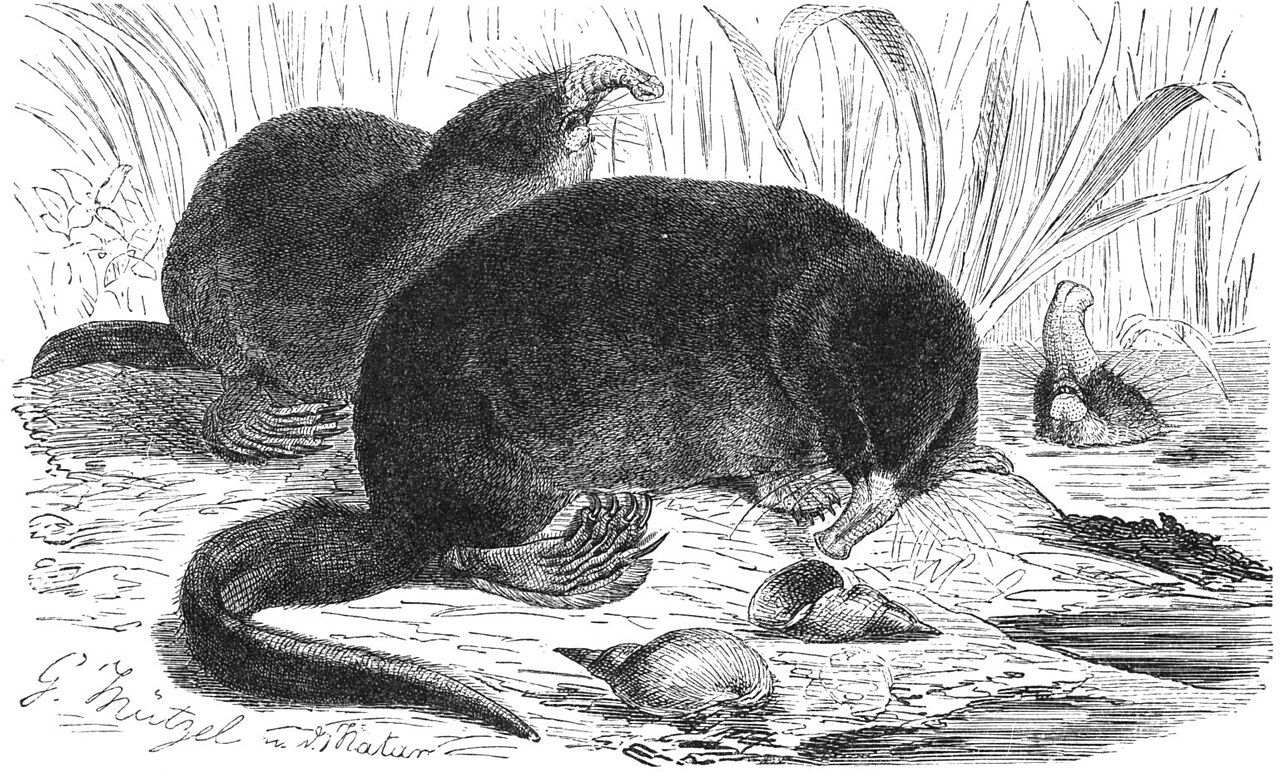
Desmans are a group of aquatic insectivores belonging to the mole family, Talpidae, classified as the tribe Desmanini (sometimes treated as the subfamily Desmaninae). There are only two living species, both found in Europe: the Russian desman (Desmana moschata), which lives in European Russia, and the Pyrenean desman (Galemys pyrenaicus), found in the northwestern Iberian Peninsula and the Pyrenees. Both are endangered, with the Russian desman listed as endangered. Their paws are webbed, and their front paws are not built for digging. During the Miocene, desmans were far more diverse and widespread, including two genera—Gaillardia and Magnatalpa—that lived in North America. The two surviving species are not firmly established as direct descendants of the fossil genus Archaeodesmana.
- field
- Aquatic insectivores, mole family (Talpidae)
- tribe
- Desmanini (also considered subfamily Desmaninae)
- living_species
- Russian desman (Desmana moschata) and Pyrenean desman (Galemys pyrenaicus)
- status
- Endangered (Russian desman listed as endangered)
- key_adaptation
- Webbed paws; front paws not well-adapted for digging
- fossil_range
- Miocene to present
Lore & Background
Desmans are aquatic insectivores belonging to the tribe Desmanini within the mole family Talpidae. Two living species exist: the Russian desman in European Russia and the Pyrenean desman in the northwest Iberian Peninsula and the Pyrenees. Both are endangered, with the Russian desman listed as endangered. Their webbed paws and front paws not well-adapted for digging reflect their aquatic lifestyle.
Reader's Guide
Desmans represent a specialized aquatic branch within the mole family, Talpidae. Their significance lies in their evolutionary adaptation to water, with webbed paws and reduced digging ability, contrasting with typical moles. The two living species, both endangered, highlight conservation concerns in Europe. The fossil record shows desmans were much more diverse and widespread during the Miocene, with genera such as Gaillardia and Magnatalpa present in North America. Both living species are thought to have derived from the fossil genus Archaeodesmana. The tribe includes several extinct genera from Europe and North America, indicating a broader historical distribution. Their endangered status underscores the vulnerability of specialized aquatic mammals.
Did You Know?
- Desmans are aquatic insectivores in the mole family Talpidae.
- The two living species are the Russian desman and the Pyrenean desman.
- The direct ancestry of the two living species from the fossil genus Archaeodesmana is not firmly established.
- Desmans were much more diverse and widespread during the Miocene, with two genera present in North America.
A Mosaic of Mammalian Design
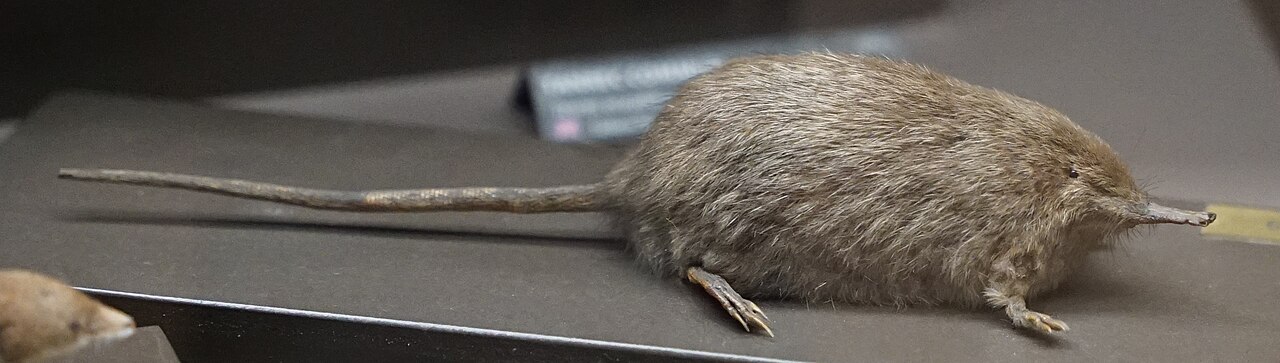
The Pyrenean desman appears assembled from parts borrowed across the animal kingdom. Its robust hindquarters, muscular thighs, and thick, swimming-capable tail echo the build of a brown rat. The powerful, clawed forelimbs and the exquisitely sensitive snout recall the European mole, while the elongated, prehensile trunk and prominent whiskers bring to mind the common shrew. This chimera of features is what earns it the nickname "trumpet rat." Standing roughly 25 centimeters long with more than half that length belonging to the tail, and weighing just 50 to 60 grams, the desman is a compact animal with no obvious sexual dimorphism. Its 44 teeth follow the same dental formula as European moles, and a single supernumerary premolar in each jaw hints at a tooth that never fully transitioned from its juvenile stage. The genus Galemys contains only this one species, a monotypic lineage whose closest relative is the Russian desman.
Life in Cold Mountain Waters
The desman is a creature of clear, fast-moving mountain streams and alpine lakes, found across the Pyrenees and the northern Iberian highlands in Spain, France, Portugal, and Andorra. It is primarily nocturnal and deliberately avoids human contact, making it one of the hardest small mammals to observe directly. Its diet centers on aquatic insect larvae—stoneflies, caddisflies, mayflies—organisms that themselves cannot tolerate polluted water, which makes the desman's presence a natural gauge of stream health. Underwater, the animal adopts a sleek, torpedo-like posture: forelimbs tucked tight, webbed hind feet splayed at roughly 45 degrees to act as paddles, sharp claws ready to grip rocks. Dives typically last around twenty seconds, during which nostril valves seal shut. On the surface it can swim powerfully, even upstream. Its vision is minimal—barely more than detecting light changes—and it navigates almost entirely through touch, relying on vibrissae at the snout's base and specialized Eimer's organs at the tip.
Waterproofing, Buoyancy, and the Cost of Diving
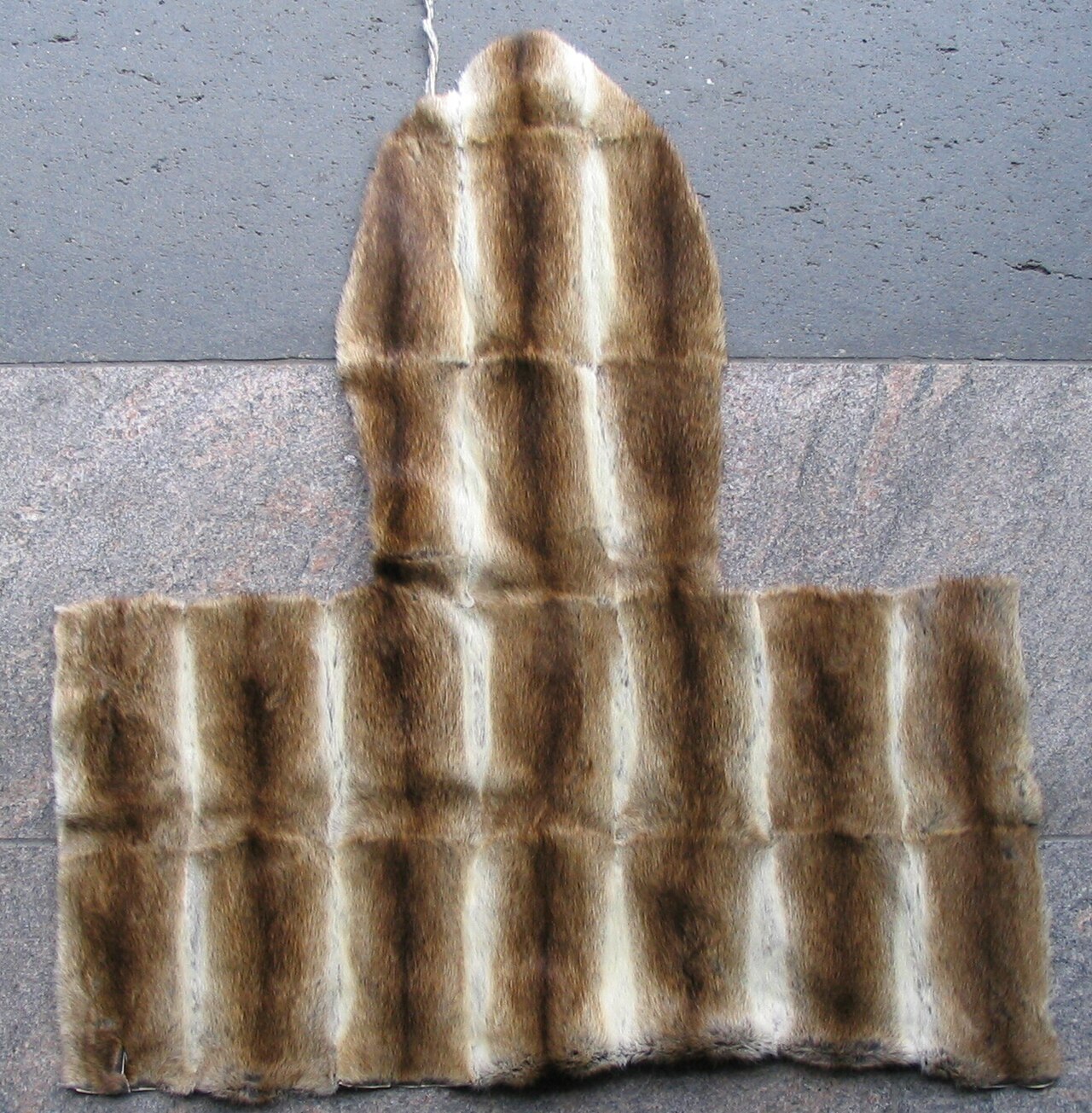
The desman's fur is a masterwork of aquatic engineering. A dense, silky undercoat stays dry against the skin, while an outer layer of long, flattened guard hairs creates a smooth shell that traps a film of insulating air. This trapped air keeps the animal warm in cold mountain water but also adds buoyancy, meaning the desman must keep moving underwater to stay submerged—extra energy spent simply fighting the urge to float. Regular grooming with an oily secretion from abdominal glands maintains this waterproofing. The fur appears grey-brown with silvery underparts and a tawny chest, and the individual hairs cluster in small tufts that can look almost scaly. The ears are hidden entirely beneath the coat, reduced to tiny circular openings of just 2 to 4 millimeters. The tail, broad at the base and tapering to a tip crowned with a small white tuft, serves as a rudder and stabilizer. Together, these adaptations make the desman an agile, powerful swimmer despite its diminutive size.
From Pest to Pyrenean Icon
For generations, local communities—especially fishermen and fish-farmers—regarded the desman as a nuisance, a perception rooted in a simple lack of understanding of what it actually ate and how it lived. That image began to shift in the 1990s as scientific attention to the species grew and its true ecology became clearer. Today the desman occupies a strikingly paradoxical position: it remains largely unknown to the general public, its reproductive biology is still poorly documented, and the IUCN has classified it as Endangered across its entire range since 2021, with populations still sliding despite conservation programs launched in the early 2000s. Yet within the Pyrenean region it has become a cultural emblem, appearing with growing frequency in local art, branding, and regional identity. The threats are concrete—dams, rock-armoured riverbanks, barrages—that fragment the narrow, unaltered watercourses the species demands. Its survival is thus inseparable from the health of the very streams that give it life.
Gallery


Frequently Asked Questions
What is a desman?
Desmans are small, fully aquatic insect-eating mammals placed in the mole family (Talpidae), sometimes grouped as the tribe Desmanini or the subfamily Desmaninae. They are the only mole relatives that live their entire lives in rivers and streams rather than underground.
Are desmans actually rodents?
No—desmans are insectivores, not rodents, even though they frequently appear in 'rodents and small mammals' reference guides. They feed on aquatic invertebrates such as insects, crustaceans, and small worms, placing them squarely in the insect-eating lineage alongside moles and shrews.
How many species of desman exist today?
Only two living species survive: the Russian desman (Desmana moschata) in European Russia and the Pyrenean desman (Galemys pyrenaicus) in northwestern Iberia and the Pyrenees. Both are classified as endangered, with the Russian desman carrying a formal endangered listing.
What makes desman anatomy different from other moles?
Desmans have webbed paws and front feet that are not built for digging, a stark contrast to the powerful, shovel-like claws of terrestrial moles. Their whole body plan is streamlined for swimming and snatching aquatic prey in flowing water.
Were desmans once more widespread?
Fossil evidence from the Miocene shows that desman-like animals were far more diverse and geographically spread out than the two species we see today. The modern group is essentially a small surviving remnant of a once-much-larger radiation.
More in Rodents And Small Mammals 1-18
Spotted an error? Know more?
This is a living reference — every entry is fact-audited, and reader corrections feed straight into our audit queue. Suggest an edit · See this site's audit record