Spermophilus
Old World ground squirrels of the Eurasian steppe.

Bouke ten Cate · CC BY 4.0
Spermophilus, also known as the Old World ground squirrels, sousliks or spermophiles, is a genus of ground squirrels in the squirrel family (Sciuridae) found across the Eurasian steppe belt and adjacent regions between Central Europe and Manchuria. Formerly more species-rich, the genus now contains 18 known species restricted to Eurasia, inhabiting steppe, short grasslands, semi-deserts, and occasionally agricultural fields or airports. Their diet consists mainly of seeds, grasses, forbs, roots, and tubers, sometimes supplemented by small invertebrates. Spermophilus live in colonial burrows and spend much of the year in hibernation or, in dry regions, aestivation.
- field
- Zoology (mammalogy)
- known_for
- Old World ground squirrels that live in colonial burrows, hibernate extensively, and communicate with high-pitched calls
- number_of_species
- 18
- habitat
- Eurasian steppe, grasslands, semi-deserts, and agricultural fields
- diet
- Seeds, grasses, forbs, roots, tubers, and small invertebrates
Lore & Background
Spermophilus are diurnal, colonial ground squirrels that rely on open, low-growing habitats to detect and evade predators using good vision and agility. They inhabit both lowlands and highlands, and some species hibernate for up to 8.5 months each year; in arid regions they may also aestivate during summer or fall. Their distributions are often separated by large rivers or mountain ranges, though up to three species may coexist in some areas, and rare mixed colonies occur. Interspecific competition is intense, and sufficient size differences (per Hutchinson's rule) appear necessary for sympatry. A few species hybridize where ranges meet.
Reader's Guide
Spermophilus are significant as a genus that exemplifies the ecological adaptations of ground squirrels to the Eurasian steppe, including prolonged hibernation, colonial burrowing, and reliance on open habitats. Their former taxonomic breadth—once including North American species—was revised when the genus was found paraphyletic relative to prairie dogs, marmots, and antelope squirrels, leading to the reclassification of many species. This revision highlights ongoing debates in mammalian phylogenetics. The genus also has a Pleistocene fossil record, with three extinct species (S. nogaici, S. polonicus, S. primigenius) moved from Urocitellus, and three others (S. citelloides, S. severskensis, S. superciliosus) known from European deposits. Their relationship with humans includes potential disease transmission via fleas and damage from burrowing under human structures.
Did You Know?
- The scientific name Spermophilus means 'seed-lovers' from Greek sperma (seed) and philos (friend).
- Some species hibernate for up to 8.5 months each year, and in dry regions they may also aestivate.
- Three Pleistocene species originally placed in Urocitellus were later moved to Spermophilus: S. nogaici, S. polonicus, and S. primigenius.
- Spermophilus use high-pitched calls to communicate and warn colony members of predators.
Taxonomy & Evolutionary Lineage
The genus Spermophilus has undergone significant redefinition over time. What was once a broad, species-rich group spanning Europe, Asia, and North America has been narrowed considerably. Genetic evidence revealed that the traditional arrangement was paraphyletic with respect to prairie dogs, marmots, and antelope squirrels, prompting the relocation of all North American members into separate genera. Today the genus holds just eighteen recognized species, all confined to Eurasia, with the sole exceptions being two Asian Urocitellus species. A 2024 study by Simonov and colleagues identified four major clades within the genus, each having diverged during the Late Miocene. The fossil record adds further depth: three Pleistocene species previously assigned to Urocitellus—S. nogaici, S. polonicus, and S. primigenius—were reassigned to Spermophilus after a critical reassessment of cranial anatomy. Among the extinct European forms, S. superciliosus stood out for its enormous range, stretching from southern England to the Volga and the Urals, and is considered a probable ancestor of the modern S. fulvus.
Colonial Life & Survival in Open Landscapes
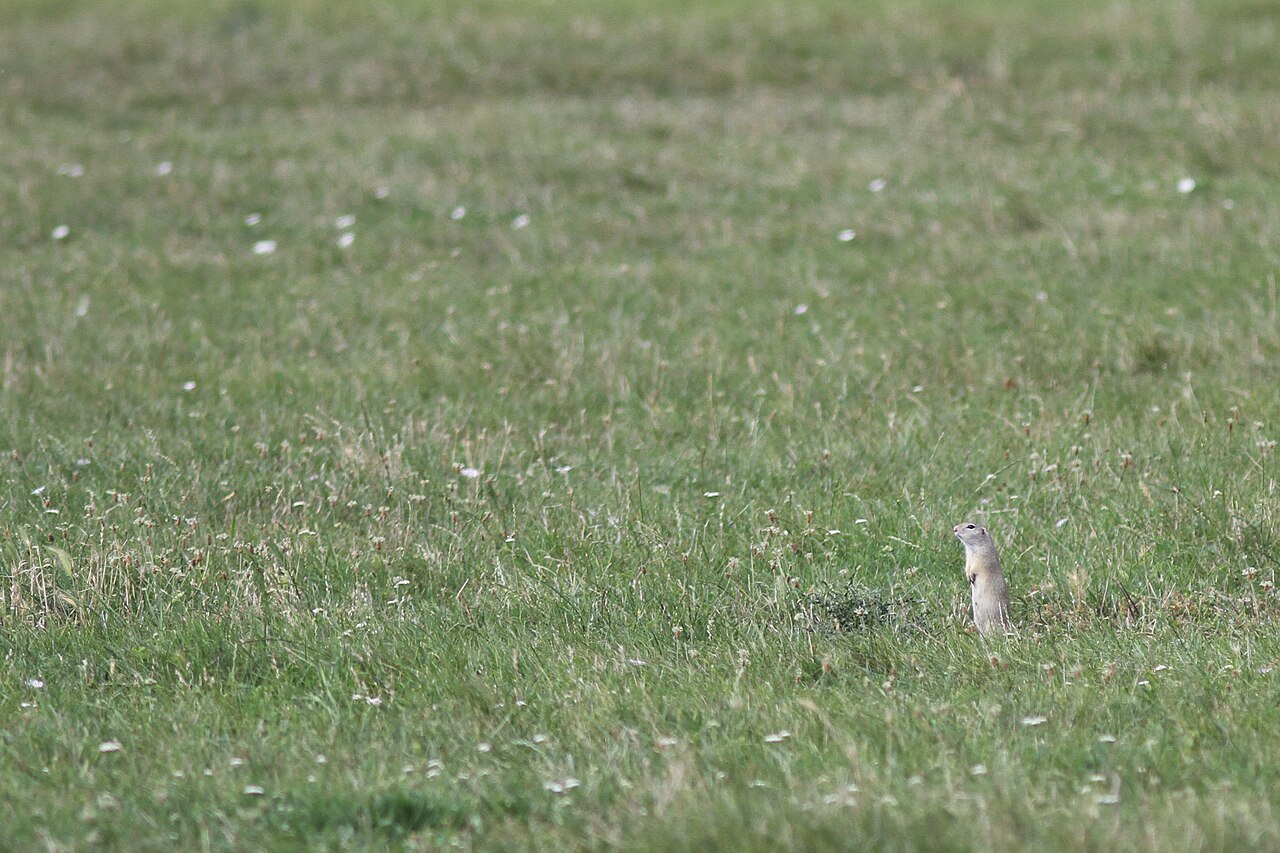
Spermophilus species are creatures of the open landscape, spending their active hours foraging across grasslands, steppe, and semi-desert terrain. As diurnal animals they rely heavily on keen eyesight and quick, agile movement to spot and dodge predators such as steppe and eastern imperial eagles, as well as steppe and marbled polecats. This dependence on visibility means they thrive in short, low-growing vegetation and can even tolerate overgrazing, but dense undergrowth turns them into easy prey. In many regions their survival is thus tied to the presence of large grazing animals that keep the grass short. Socially, most species live in colonies within interconnected burrow systems, though a few may be found alone. They communicate through high-pitched vocalizations that serve as colony-wide predator alerts. Seasonally, these squirrels shut down for extended hibernation—up to eight and a half months in some species—and in arid zones they may also aestivate through summer or autumn. Where two or three species overlap, interspecific competition is fierce, and sufficient body-size differences, following Hutchinson's rule, appear necessary for coexistence.
Size, Coloration & Seasonal Transformation
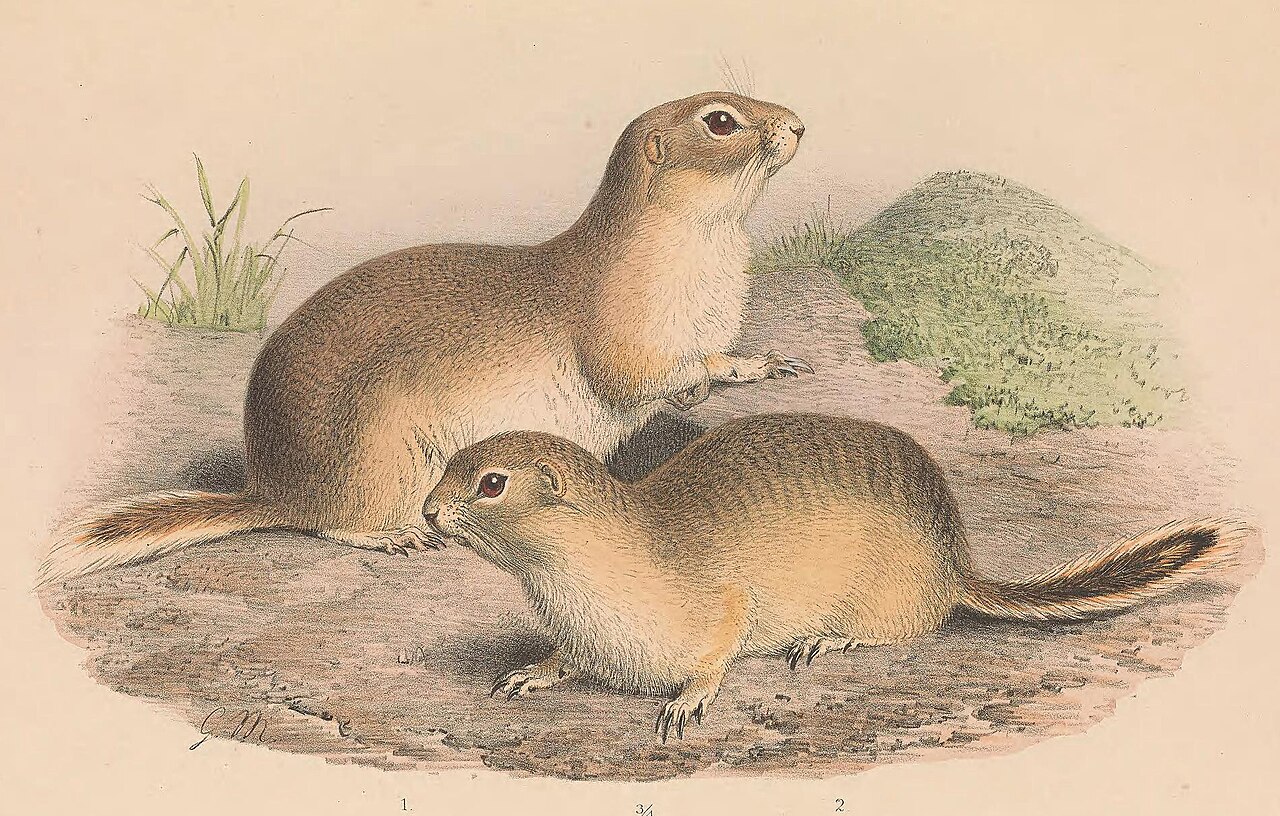
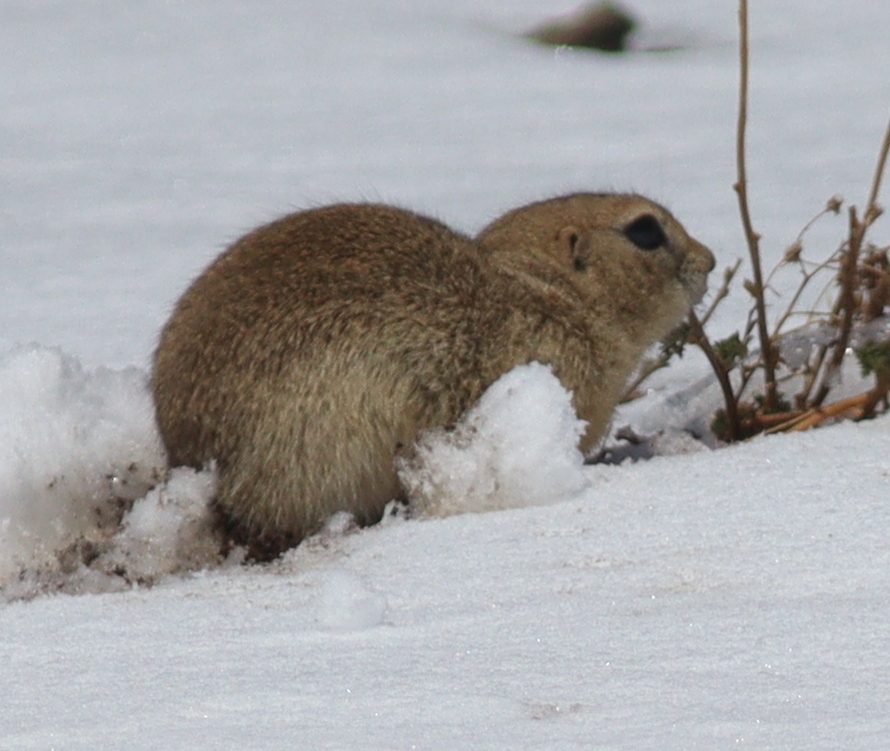
Across the eighteen recognized species, Spermophilus presents a palette of muted earth tones—yellowish, pale orange, light brown, or greyish—often with inconspicuous mottling, faint spotting, or a touch of orange on the head. Two exceptions stand out: S. suslicus and S. odessanus, which display brown upperparts marked by distinct white spots. Body size varies considerably. Head-and-body length ranges from roughly 17 to 40 centimeters, and the tail, always relatively short, measures between 10 and 45 percent of that length. The most dramatic variation is in mass. Before entering hibernation, a large S. fulvus can reach two kilograms, while S. major tops out near 1.4 kilograms. Yet earlier in the year the same animals weigh far less, and most other species stay under half a kilogram even at their seasonal peak. This pronounced seasonal fluctuation in body mass reflects the energy demands of the long dormancy periods these squirrels endure, making their autumn fattening a critical survival strategy.
Names, Ranges & Human Encounters
The very name Spermophilus is a small tribute to these animals' dietary preferences, combining the Greek words for seed and lover to mean seed-lovers. In everyday speech across Eurasia, many species carry the name suslik or souslik, borrowed from the Russian суслик, with cognates like Polish suseł and German Ziesel all likely tracing back to a shared Proto-Slavic root. The genus spans a remarkable east-west corridor, from Central Europe all the way to Manchuria, occupying steppe, short grassland, semi-desert, and even agricultural fields and airports. This proximity to human infrastructure brings both fascination and friction. Ground squirrels can harbor fleas capable of transmitting serious diseases to people, a link historically associated with the Black Death. Their extensive tunneling beneath settlements and structures has also made them a source of property damage. Despite these tensions, the animals remain a defining presence across the vast Eurasian grassland belt, their burrows and colonies a signature feature of open landscapes on the continent.
Gallery
Frequently Asked Questions
Who is Spermophilus?
Spermophilus is a genus of Old World ground squirrels in the squirrel family (Sciuridae), often called sousliks or spermophiles by enthusiasts. It currently holds 18 recognized species, all restricted to the Eurasian landmass.
Where do Spermophilus species live?
These squirrels occupy the broad steppe belt running from Central Europe all the way to Manchuria, favoring open grasslands, semi-deserts, and short-grass prairies. They are also commonly spotted in agricultural fields and even airport grounds where flat, open terrain suits their burrowing habits.
What does a typical Spermophilus eat?
Their diet is overwhelmingly plant-based, built around seeds, grasses, forbs, roots, and tubers gathered across the steppe. They occasionally pick up small invertebrates as a protein supplement.
How do Spermophilus live and communicate?
They are colonial animals that dig and share extensive underground burrow systems. They are well known among observers for their sharp, high-pitched alarm calls and for entering long hibernation periods to get through cold or resource-poor seasons.
Why is Spermophilus important to zoology?
With 18 species spread across a vast geographic range, the genus is a go-to model for studying steppe ecology, hibernation physiology, and colonial social behavior in small mammals. Their abundance in a region also serves as a practical indicator of healthy grassland ecosystems.
More in Rodents And Small Mammals 1-18
Spotted an error? Know more?
This is a living reference — every entry is fact-audited, and reader corrections feed straight into our audit queue. Suggest an edit · See this site's audit record