Sengi
Small African mammals related to elephants, not shrews.

Leonid Dobrov · CC BY-SA 4.0
Sengis, also called elephant shrews or jumping shrews, are small insectivorous mammals native to Africa, belonging to the family Macroscelididae in the order Macroscelidea. They are widely distributed across southern Africa and can be found in almost any type of habitat, from the Namib Desert to thick forest.
- field
- Mammalogy
- known_for
- Being small insectivorous mammals related to elephants, with long snouts and fast running speeds
- native_to
- Africa
- family
- Macroscelididae
- order
- Macroscelidea
Lore & Background
Sengis are small, quadrupedal mammals with scaly tails, long snouts, and long legs relative to their size, which they use to move like rabbits. They are one of the fastest small mammals, recorded at speeds of 28.8 kilometers per hour. They have relatively large brains compared to other mammalian insectivores and a lifespan of about two and a half to four years in the wild. Their dental formula is 1-3.1.4.23.1.4.2-3, with large canine teeth and high-crowned cheek teeth similar to those of ungulates.
Reader's Guide
Sengis are significant because they represent a striking example of convergent evolution and phylogenetic reclassification. Originally grouped with shrews due to superficial resemblance, molecular evidence placed them within Afrotheria, a clade that includes elephants, manatees, and aardvarks. This reclassification highlights the importance of genetic analysis over physical appearance in taxonomy. Their ecological role as insectivores in diverse African habitats, from deserts to forests, underscores their adaptability. Their unique reproductive biology, including a menstrual cycle similar to humans, made them a model for studying human menstruation in the 1940s. Their legacy includes challenging traditional classifications and enriching our understanding of mammalian evolution.
Did You Know?
- Sengis are more closely related to elephants than to true shrews.
- Female sengis undergo a menstrual cycle similar to that of human females.
- Sengis can run at speeds up to 28.8 kilometers per hour.
A Surprising Place in the Tree of Life
For decades, these tiny African mammals went by the misleading name "elephant shrew," a label that reflected their long, trunk-like snouts and their surface-level resemblance to true shrews of the order Eulipotyphla. That classification, however, turned out to be a case of convergent appearance rather than genuine kinship. Phylogenetic work revealed that the family Macroscelididae had no meaningful connection to Soricidae at all; instead, the animals sit far closer to elephants on the evolutionary tree. In 1997, biologist Jonathan Kingdon championed a new common name, "sengi" (singular sengi), drawn from Bantu languages spoken across the African continent, shedding the shrew association entirely. The following year, in 1998, the group was formally slotted into the newly recognized clade Afrotheria. Within that broader assemblage, morphological and molecular evidence positions macroscelids at the base of the Afroinsectivora subclade, confirming that their insect-eating lifestyle evolved independently of the shrews they so closely mimic in appearance.
Built for Speed and Precision
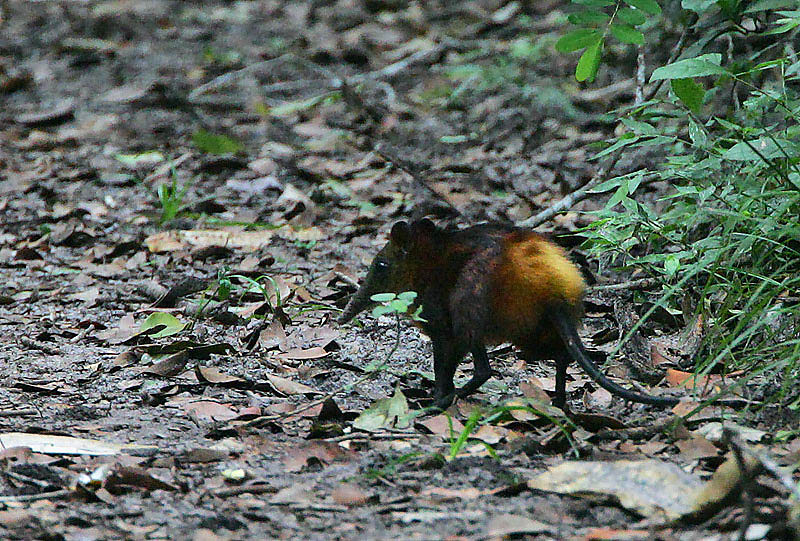
Sengis are compact, four-legged insectivores whose proportions belie their capabilities. Their bodies range from roughly ten to thirty centimetres in length and fifty to five hundred grams in weight, though the grey-faced sengi pushes the upper boundary at around seven hundred grams. Despite their small frames, these animals are among the fastest small mammals on record, having been clocked at twenty-eight point eight kilometres per hour. Their legs are notably long for their body size, and they cover ground in a bounding, rabbit-like gait. The most striking feature is the flexible, elongated snout, whose length shifts from one species to another and serves as a probing tool for locating prey. Compared with other insect-eating mammals of similar size, sengis possess relatively large brains. Their dentition is equally distinctive: prominent canine teeth paired with high-crowned cheek teeth that echo the grinding surfaces of ungulates, giving them a dental formula of 1-3.1.4.2/3.1.4.2-3. In the wild, a sengi's life expectancy stretches from about two and a half to four years.
Solitary Pairs and Cleared Highways
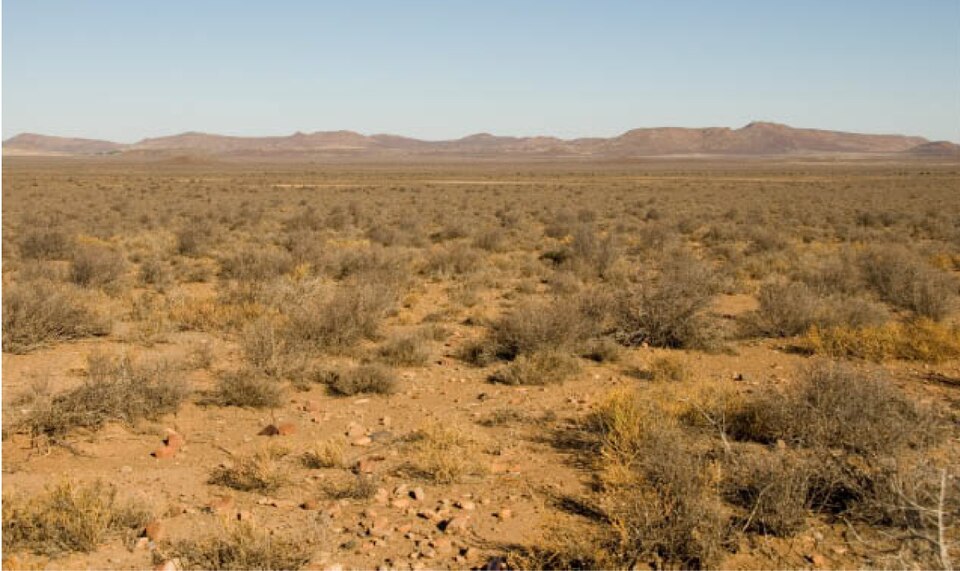
Although many sengi species form monogamous pairs, their social world is sparse. Partners share and defend a home territory, marking its boundaries with scent glands that also attract mates. Beyond reproduction, the two show little affection and even maintain separate nests. Females repel other females, while males do the same among their own sex. In the dry steppes and stone deserts of southwestern Africa, short-eared sengis patrol a network of cleared pathways they cut through undergrowth, using these obstacle-free corridors to forage for insects and to dash away from threats. Their wariness, camouflage, and explosive speed make them hard to trap or observe. Reproductively, female sengis undergo a menstrual cycle similar to that of human females, a trait shared by very few non-primate mammals; in the 1940s, researchers exploited this similarity to study human menstruation. After a gestation of forty-five to sixty days, a litter of one to three well-developed young is born, and the pups can run within hours. The female carries mashed insects in her cheek pouches to supplement their milk diet after five days, and by fifteen days the young begin migrating to establish their own one-square-kilometre ranges, reaching sexual maturity in forty-one to forty-six days.
A Fossil Record and a Rediscovery
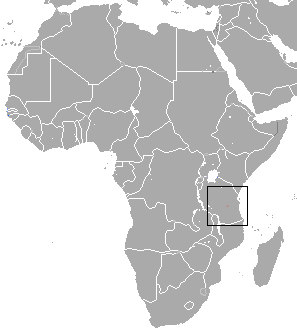
Sengis are found across the southern African continent in an astonishing range of settings, from the hyper-arid sands of the Namib Desert to boulder-strewn outcrops in South Africa to dense forest. One species, the North African sengi, holds out in the semi-arid, mountainous terrain of the continent's far northwest. The Somali sengi offers a remarkable chapter in modern natural history: after going unobserved from 1968 until 2020, it was rediscovered by a team of scientists working in Djibouti. The fossil record, entirely African, stretches back to the early-to-middle Eocene, with Chambia from Tunisia representing the earliest definitive macroscelid. During the Paleogene, the group underwent considerable diversification, producing forms like Myohyrax, so hyrax-like that it was initially lumped with that group, and Mylomygale, which bore a rodent-like appearance. These unusual lineages all vanished by the Pleistocene. The split between macroscelids and their closest relatives, the afrosoricidans, is estimated at roughly fifty-seven and a half million years ago, in the late Paleocene, anchoring the sengi lineage deep in Africa's evolutionary past.
Gallery



Frequently Asked Questions
Who is Sengi?
Sengi is the common name for a group of tiny African mammals in the family Macroscelididae, more formally known as elephant shrews or jumping shrews. They are not true shrews at all but instead belong to their own order, Macroscelidea.
What are Sengi's powers/role?
Sengi are remarkably fast runners for their size and are skilled insectivores, using their elongated snouts to probe for prey in soil and leaf litter. Their most surprising trait is their deep evolutionary kinship with elephants and hyraxes rather than with the shrews their common name implies.
Where does Sengi live?
Sengi occupy a strikingly wide range of southern African environments, stretching from the arid Namib Desert all the way into dense tropical forests. This broad habitat tolerance makes them one of the most widely distributed small-mammal groups on the continent.
Why is Sengi important?
Sengi are a textbook example of convergent evolution, having independently evolved a shrew-like body plan while actually being distant relatives of proboscideans. Studying them helps mammalogists understand how similar ecological niches can produce remarkably similar forms in completely unrelated lineages.
Is Sengi actually a shrew?
Despite the name "elephant shrew," Sengi share no close evolutionary relationship with true shrews (family Soricidae). They are members of the order Macroscelidea, which places them far closer to elephants and hyraxes in the tree of life.
More in Rodents And Small Mammals 1-18
Spotted an error? Know more?
This is a living reference — every entry is fact-audited, and reader corrections feed straight into our audit queue. Suggest an edit · See this site's audit record