Groundhog
A lowland marmot crucial to soil health across North America.

Paul Danese · CC BY-SA 4.0
The groundhog (Marmota monax) is a rodent in the Sciuridae family, part of the marmot group—large ground squirrels. Unlike most marmots, which inhabit rocky, mountainous terrain, this species lives in lowland areas across North America, ranging through much of the eastern United States, Canada, and into Alaska. The groundhog plays a key role in keeping soil healthy in woodlands and plains, making it a vital habitat engineer. Common names include chuck, wood-chuck, groundpig, whistle-pig, whistler, thickwood badger, Canada marmot, monax, moonack, weenusk, red monk, land beaver, and, among French Canadians in eastern Canada, *siffleux*. "Thickwood badger" was used in the Northwest to separate this animal from the prairie badger. *Monax* (from Algonquian *Móonack*) means "digger" (compare Lenape *monachgeu*). Young groundhogs are sometimes called chucklings. The name "woodchuck" has nothing to do with wood or chucking; it comes from an Algonquian (possibly Narragansett) word, *wuchak*. This similarity inspired the tongue-twister: "How much wood would a woodchuck chuck / if a woodchuck could chuck wood? / A woodchuck would chuck all the wood he could / if a woodchuck could chuck wood!"
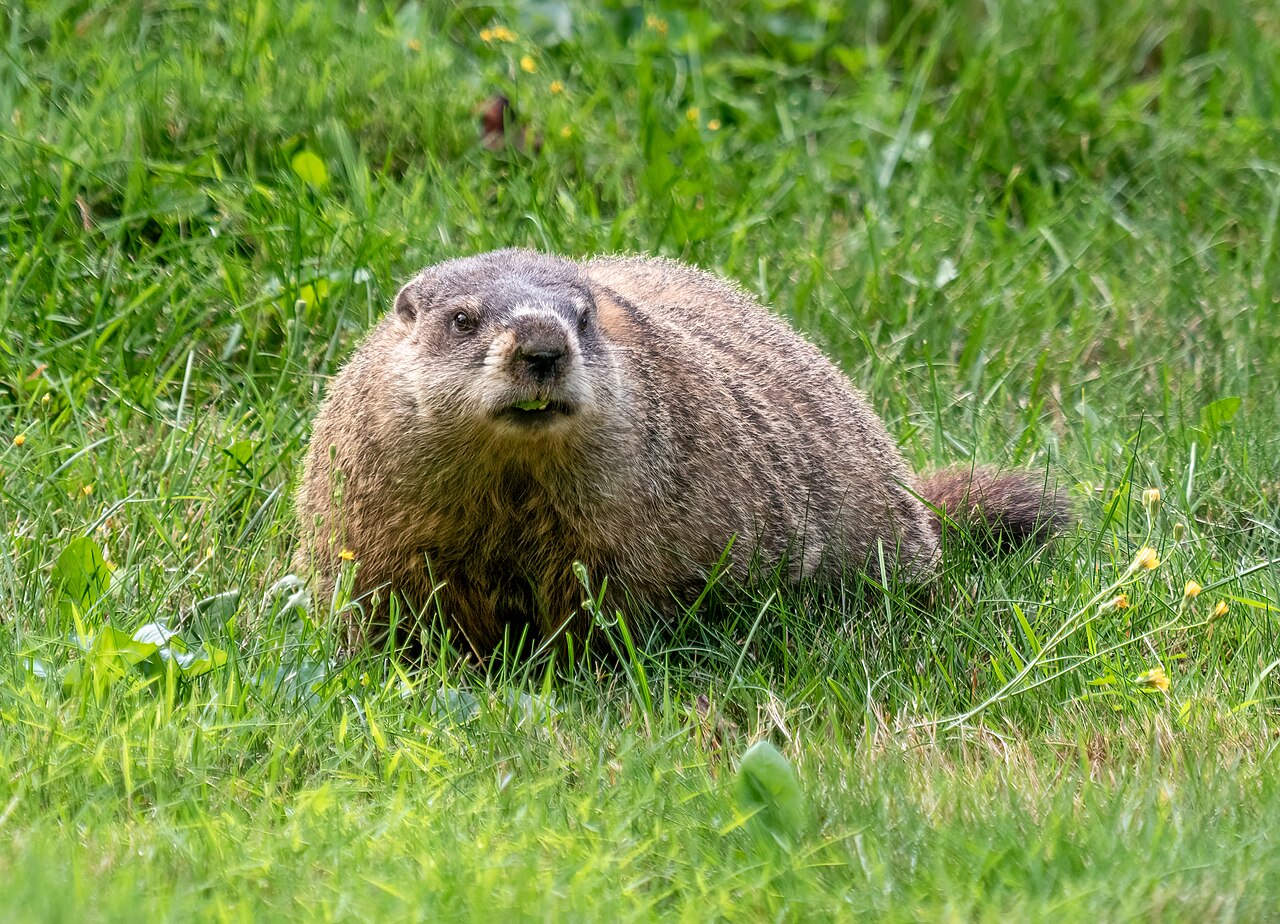
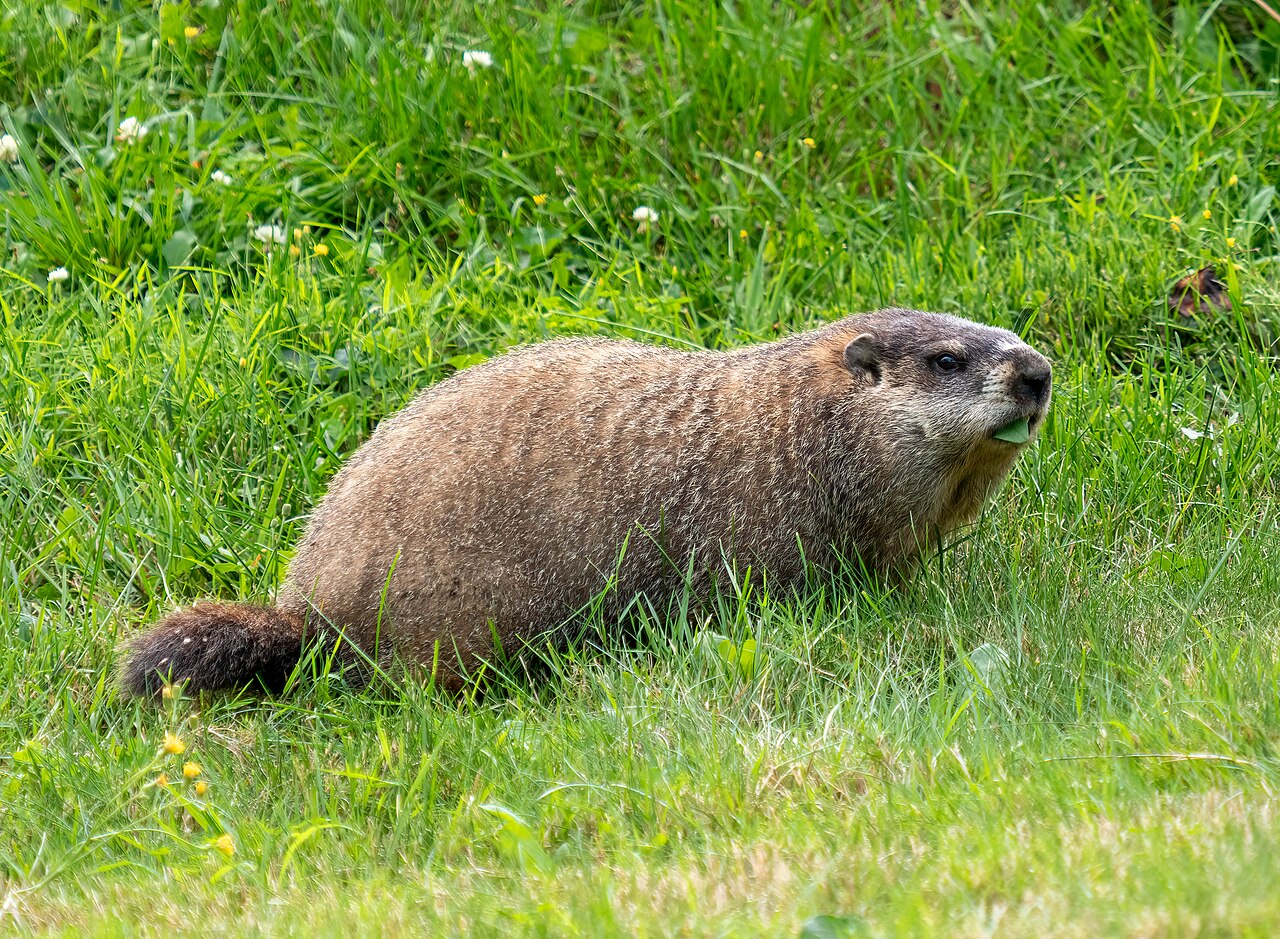
Within its geographic range, the groundhog is the largest sciurid, except in British Columbia, where the hoary marmot may rival it. Adults range from 41.8 to 68.5 cm (16 7/16 to 26 15/16 in) in total length, with a tail of 9.5 to 18.7 cm (3 3/4 to 7 3/8 in). Typical adult weights fall between 2 and 6.3 kg (4 lb 7 oz to 13 lb 14 oz). Males are slightly larger than females on average, and like all marmots, they are much heavier in autumn (during hyperphagia) than when emerging from hibernation in spring. Year-round, adult males average 3.83 kg (8 lb 7 oz), with spring-to-fall averages of 3.1 to 5.07 kg (6 lb 13 oz to 11 lb 3 oz); females average 3.53 kg (7 lb 13 oz), with spring-to-fall averages of 3.08 to 4.8 kg (6 lb 13 oz to 10 lb 9 oz). These seasonal shifts reflect the circannual storage and use of fat. Groundhogs gain weight each year for the first two or three years, then plateau. They have four incisors that grow about 1.5 mm (1/16 in) per week, worn down by constant use. Unlike many rodents, their incisors are white to ivory-white. Their powerful, short le
- Scientific name
- Marmota monax (originally Mus monax)
- Family
- Sciuridae
- Geographic range
- Eastern United States, across Canada, into Alaska
- Typical weight
- 2 to 6.3 kg (4 lb 7 oz to 13 lb 14 oz)
- Typical length
- 41.8 to 68.5 cm (16+7⁄16 to 26+15⁄16 in)
- Known for
- Burrowing, soil engineering, and the tongue-twister about woodchucking
Lore & Background
The groundhog is exceptional among marmots because it dwells in lowland habitats, unlike other marmots such as the yellow-bellied and hoary marmots, which live in rocky and mountainous areas. It is considered one of the most solitary of marmot species, though it lives in aggregations, and its social organization and long-term pair bonds vary across populations. Male and female interactions are usually limited to the mating season and copulation, but certain populations have been observed to form long-term adult male-female associations throughout the year and from year to year. The groundhog is an extremely intelligent animal, forming complex social networks and kinship with its young; it is capable of understanding social behavior, communicating threats through whistling, and working cooperatively to accomplish tasks such as burrowing.
Reader's Guide
The groundhog (Marmota monax) holds significance as a crucial habitat engineer, contributing to the maintenance of healthy soil in woodlands and plains. Its burrowing activity aerates and turns soil, and its dens provide shelter for other species. Despite being the most solitary of marmots, it exhibits complex social behaviors, including cooperative burrowing and whistle-based communication. The species is well-adapted for digging, with powerful short legs and broad claws, and its burrows can extend up to 24 feet (7.3 m) in length. Groundhogs are mostly herbivorous, eating wild grasses, vegetation, and occasionally small animals, and they rely on fat deposits to survive winter hibernation rather than storing food. Their white incisors grow 1.5 mm per week and are worn down by constant use. The groundhog's legacy includes its role in folklore, particularly the tongue-twister about woodchucking, and its status as a lowland marmot that thrives in human-altered landscapes.
Did You Know?
- The groundhog is the largest sciurid in its geographical range, except in British Columbia where its range may be comparable to that of the hoary marmot.
- Groundhogs have four incisors that grow 1.5 mm per week and are white to ivory-white, unlike the incisors of many other rodents.
- The name 'woodchuck' stems from an Algonquian (possibly Narragansett) name for the animal, wuchak, and is not related to wood or chucking.
A Name with Many Faces
The groundhog's scientific identity traces back to 1758, when Carl Linnaeus assigned it the name Mus monax, drawing on a description first published by George Edwards in 1743. Classified within the family Sciuridae, it belongs to the broader group of large ground squirrels called marmots, yet it stands apart as a lowland species. Over the centuries, countless common names have accumulated across regions and languages: chuck, groundpig, whistle-pig, thickwood badger, Canada marmot, weenusk, red monk, land beaver, and among French Canadians in eastern Canada, siffleux. The Northwest term "thickwood badger" served specifically to set the animal apart from the prairie badger. Perhaps most intriguingly, the widely used name "woodchuck" has nothing to do with wood or with the act of chucking. It derives from an Algonquian word, possibly Narragansett, wuchak. The Algonquian root monax, also rendered as móonack, carries the meaning "digger," a sense echoed in the Lenape term monachgeu. Young groundhogs earn the affectionate label chucklings, and the phonetic resemblance between "wood" and "chuck" spawned the beloved English tongue-twister about how much wood a woodchuck would chuck.
Built for the Burrow
Among the sciurids of its range, the groundhog holds the title of largest, with only the somewhat bigger hoary marmot of British Columbia presenting a comparable size. Adults stretch from roughly 42 to 69 centimeters in total length, their tails accounting for just a quarter of that span—shorter than in most other members of the family. Weights typically span two to 6.3 kilograms, with males edging out females on average. A striking seasonal pattern governs their mass: during autumn hyperphagia, groundhogs accumulate substantial fat reserves, making them considerably heavier than when they emerge from hibernation in spring. Males average about 3.8 kilograms across the year, ranging from roughly 3.1 in spring to over 5 kilograms by fall; females hover near 3.5 kilograms, climbing from about 3.1 to 4.8 over the same arc. Weight climbs progressively for the first two or three years of life before plateauing. Their four incisors, distinctive in their white to ivory-white coloration, grow approximately 1.5 millimeters each week, a rate matched by constant wear from use. Powerful short legs and broad, elongated claws make them exceptionally well-suited to digging.
Solitary by Nature, Social by Necessity
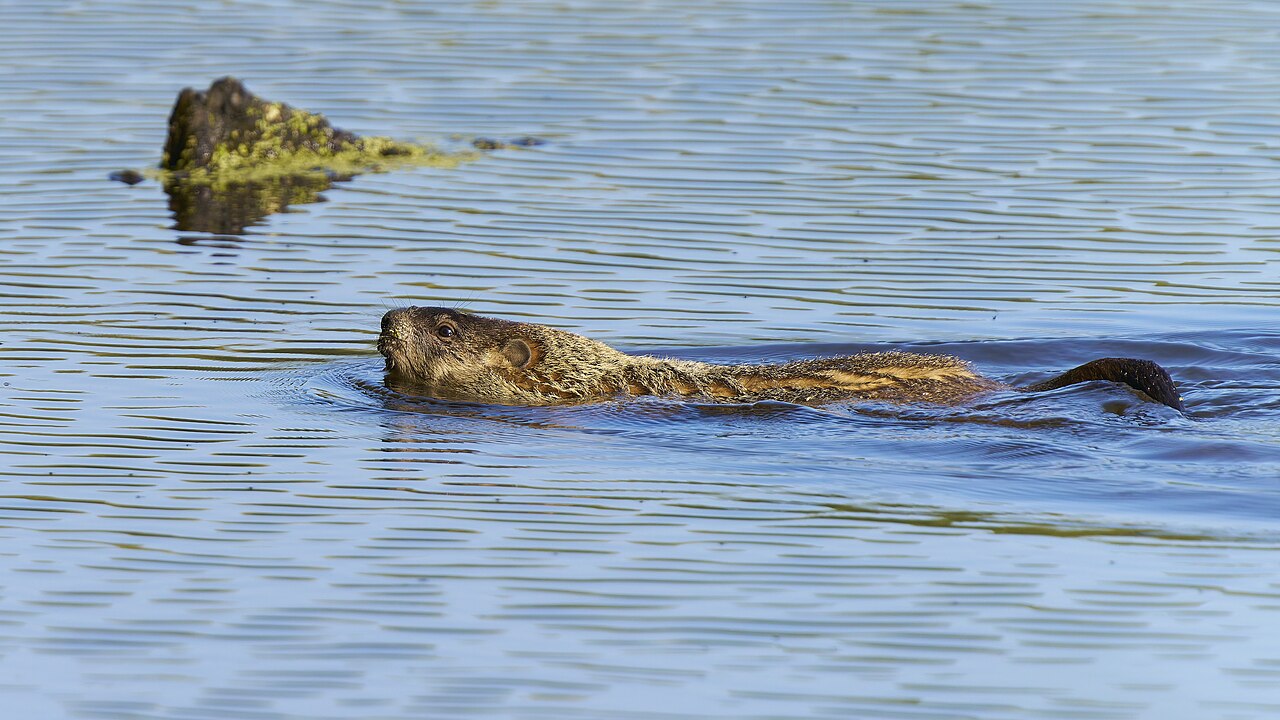
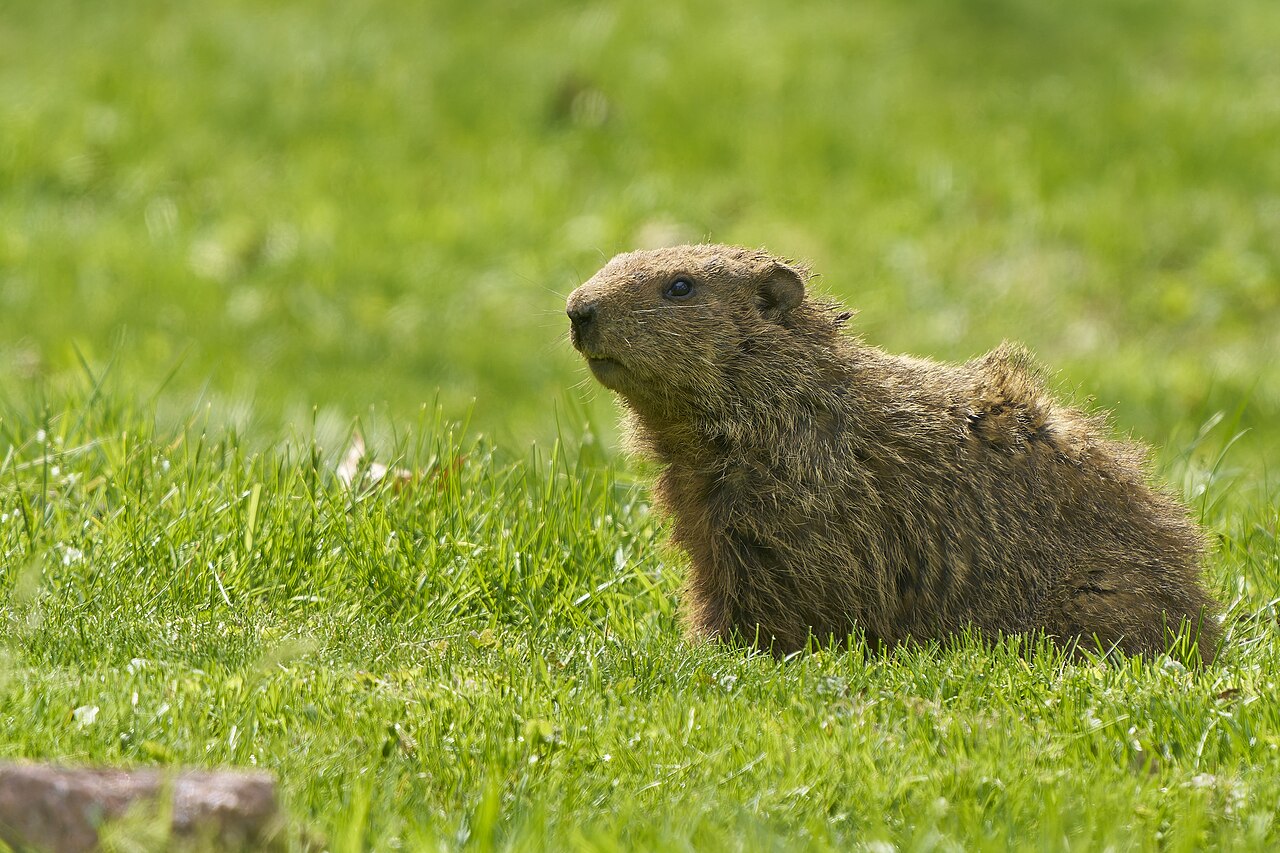
The groundhog is regarded as one of the most solitary species among marmots, yet it does not live in absolute isolation. Individuals inhabit aggregations, and the structure of their social bonds shifts from one population to another. In most groups, male and female interactions are confined to the mating season and copulation itself. However, researchers have documented certain populations in which adult males and females maintain a year-round association, sometimes persisting from one year to the next. Outside the burrow, groundhogs are alert and territorial, often standing erect on their hind feet to scan for danger. When alarmed, they emit a high-pitched whistle to alert the rest of the colony—the origin of the nickname "whistle-pig." Other vocalizations include squeals during fights or injury, low barks, and the grinding of teeth. Despite their heavy build, they are capable swimmers and will climb trees to escape predators or survey their surroundings. If a burrow is invaded, the animal fights back fiercely using its large incisors and front claws. Upright play-fighting, while part of their behavioral repertoire, is exceedingly rare, requiring a degree of social tolerance that is virtually unknown in this species.
Engineer of the Lowland
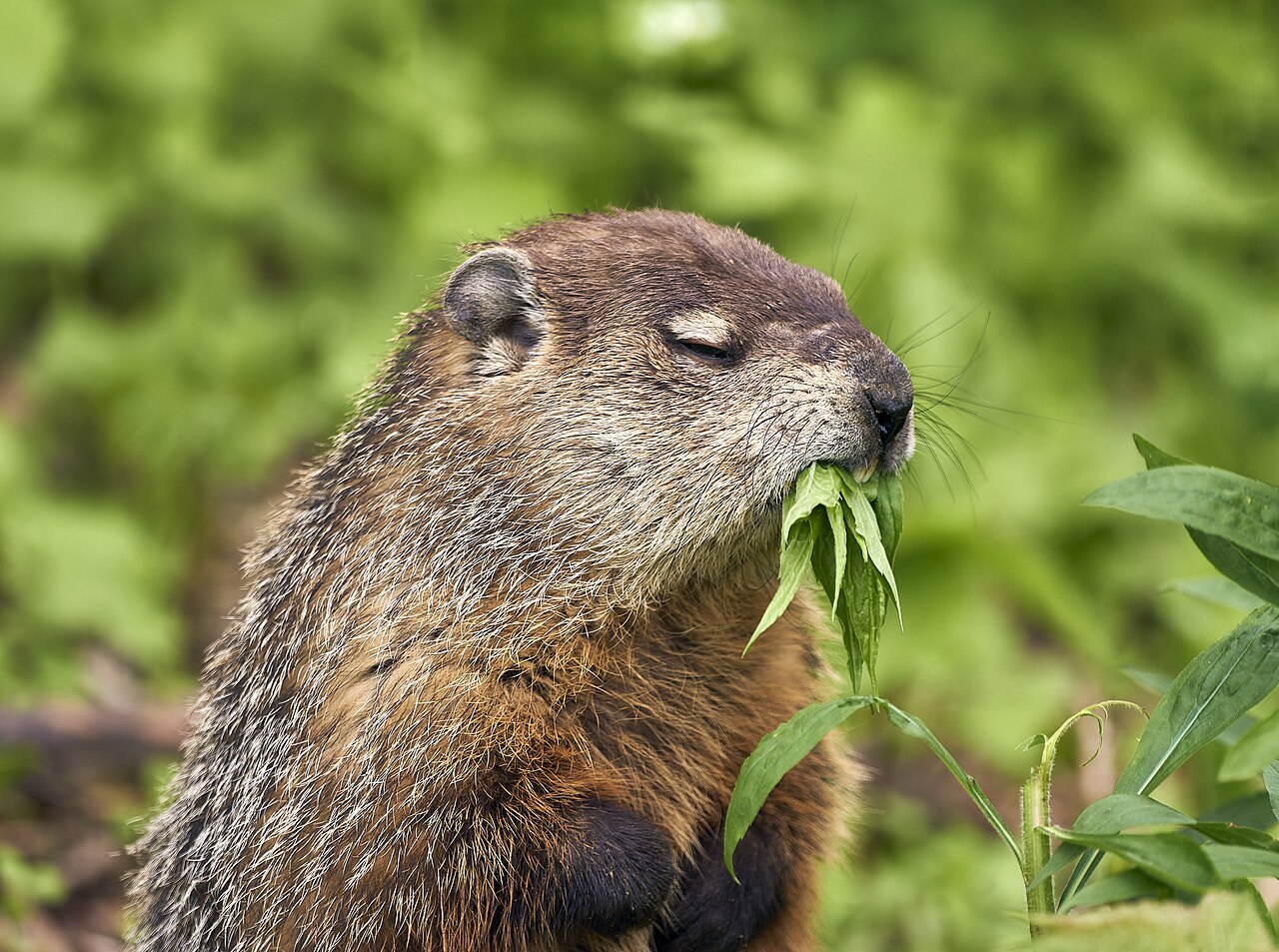
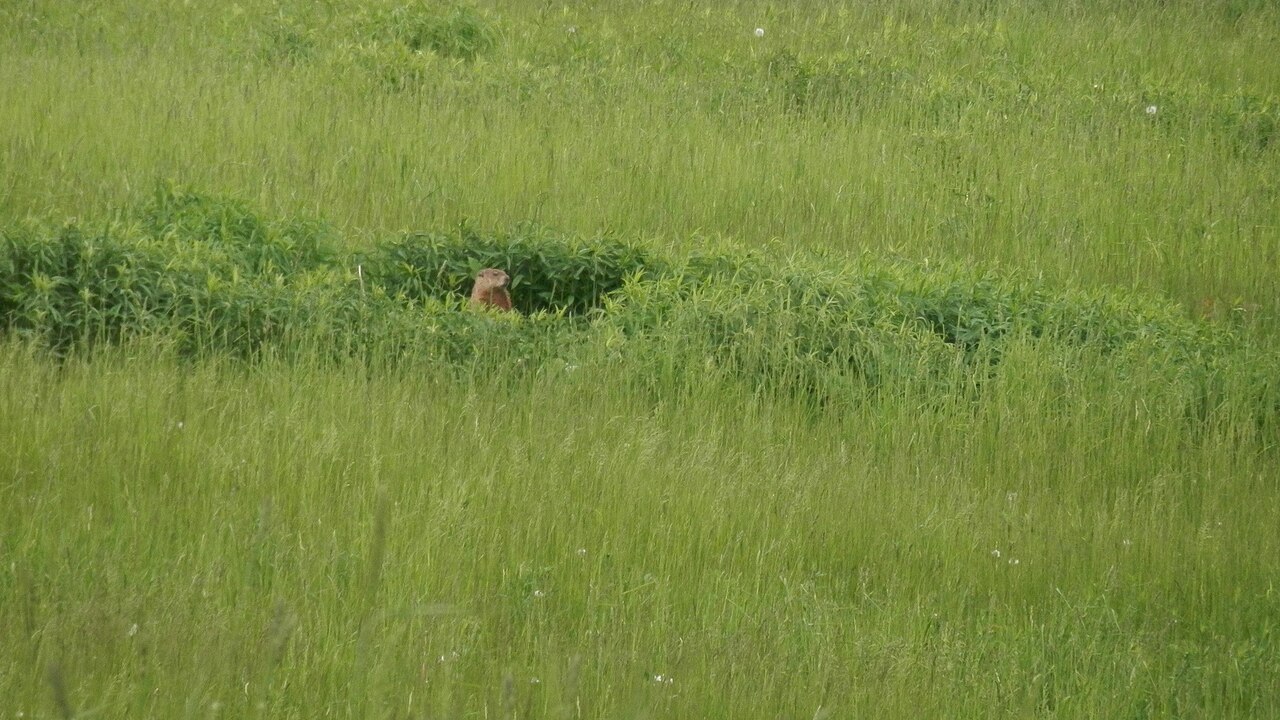
As a lowland creature, the groundhog is exceptional among marmots, which typically occupy rocky, mountainous terrain. Its range stretches across much of the Eastern United States, through Canada, and into Alaska, favoring open country, woodland edges, small woodlots, fields, pastures, and hedgerows. It constructs dens in well-drained soil and typically maintains separate summer and winter burrows, rarely straying far from an entrance. Ecologically, the species plays a key role in keeping woodland and plain soils healthy, earning its reputation as a crucial habitat engineer. It is also an extremely intelligent animal, capable of forming complex social networks and kinship ties with its young, sending threat signals via whistles, and collaborating on cooperative tasks such as digging burrows. Its diet is predominantly herbivorous, centered on wild grasses, berries, bark, and leaves, with dandelion and coltsfoot being especially important in early spring. Other favored plants include various clovers, raspberries, mulberries, buckwheat, timothy-grass, buttercup, and alfalfa. Human activity, by increasing food access and abundance, has allowed the species to thrive in modified landscapes.
Gallery
Frequently Asked Questions
Who is Groundhog?
The groundhog (Marmota monax) is a large ground squirrel in the Sciuridae family, classified within the marmot group. It is a lowland rodent native to much of North America, spanning the eastern United States, across Canada, and into Alaska.
What is Groundhog's role in its ecosystem?
Groundhog functions as a critical habitat engineer, using its extensive burrowing to aerate soil and create microhabitats for countless other organisms. This soil-engineering work keeps woodland and plain ecosystems healthy and productive.
How does Groundhog's story end?
Each winter Groundhog seals itself deep in its burrow and hibernates, dropping its heart rate and body temperature to conserve energy through months without food. It re-emerges in spring to dig and forage again, repeating this annual cycle year after year across its vast range.
Why is Groundhog important?
Its burrow networks support a wide array of invertebrates, small mammals, and plant roots, making it a keystone species in lowland habitats. Culturally, it is also the star of the well-known Groundhog Day tradition and the source of the classic English tongue-twister about woodchucking.
What are Groundhog's common names?
This single species goes by a remarkable number of nicknames, including chuck, wood-chuck, whistle-pig, land beaver, Canada marmot, thickwood badger, and monax, among others. The sheer variety of regional names reflects how widely people across North America have interacted with this animal for generations.
More in Rodents And Small Mammals 1-18
Spotted an error? Know more?
This is a living reference — every entry is fact-audited, and reader corrections feed straight into our audit queue. Suggest an edit · See this site's audit record