Giant pouched rat
Large African rodents trained to detect land mines and tuberculosis.

Courtesy of NIAID Ryan Kissinger · Public domain
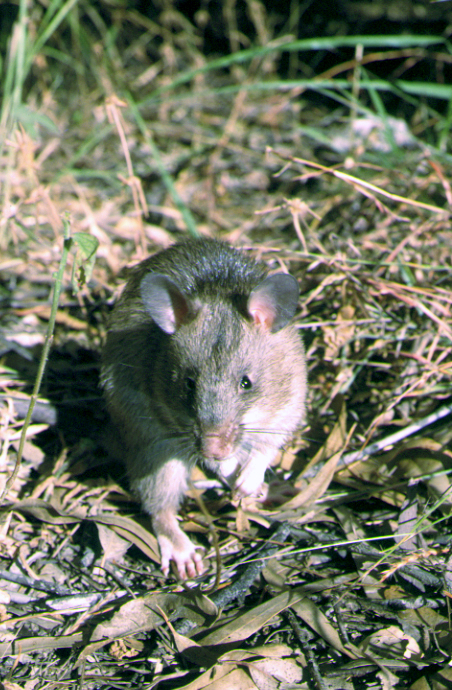
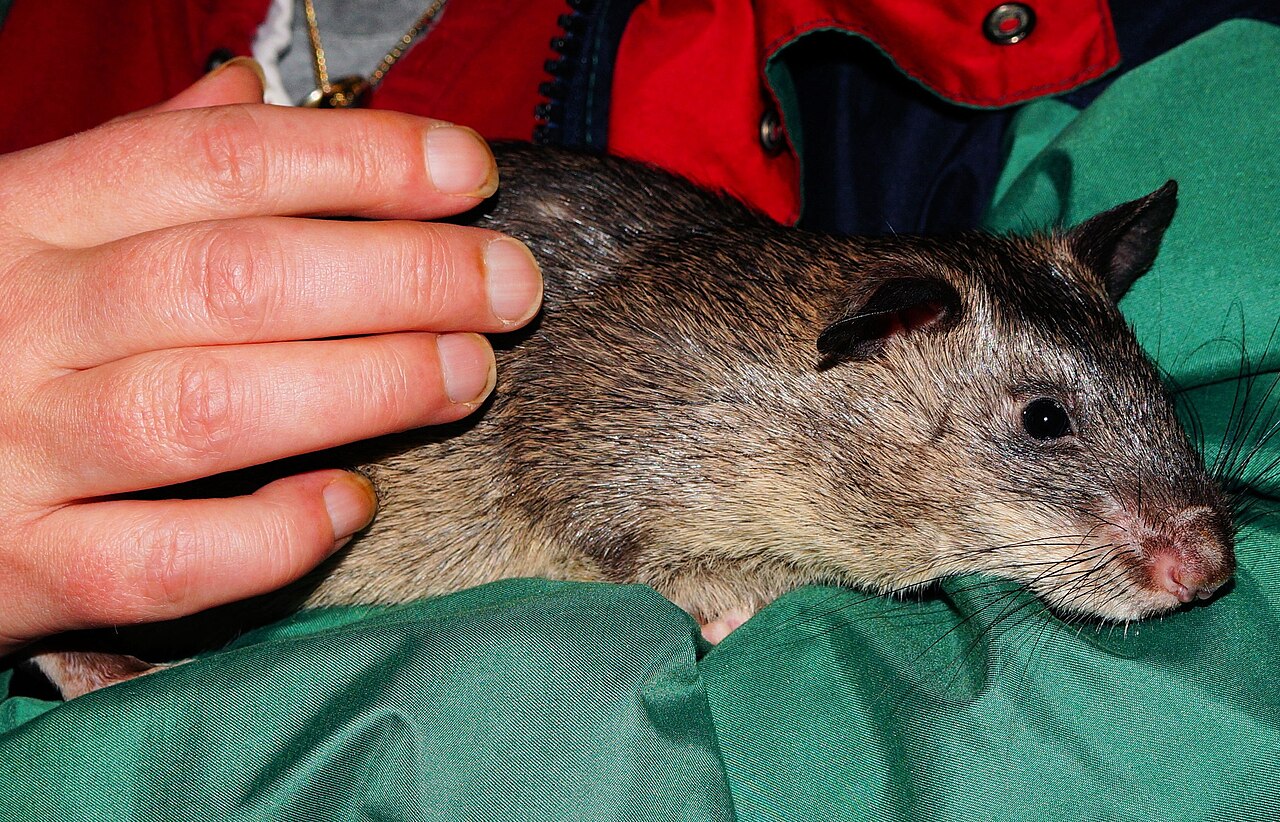
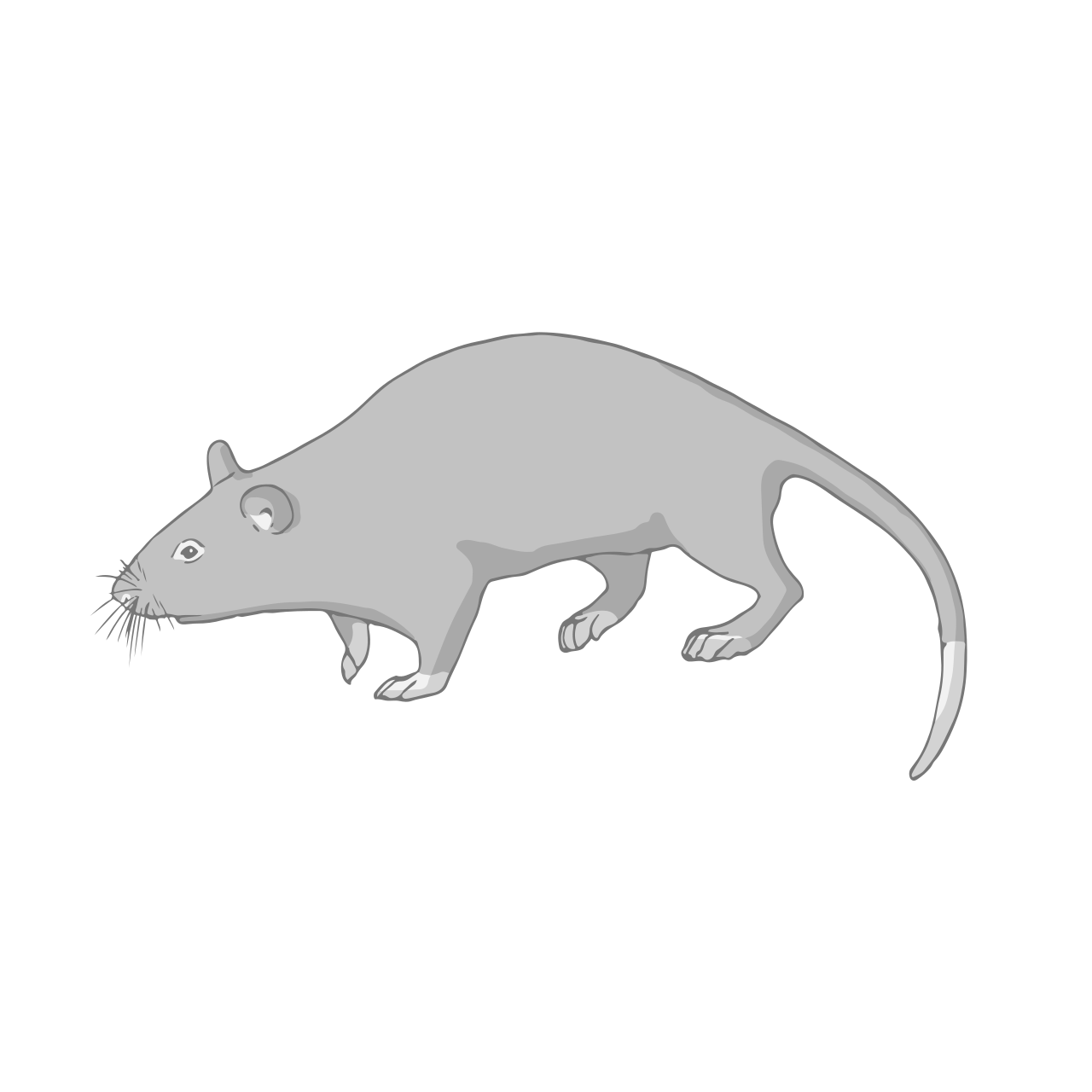
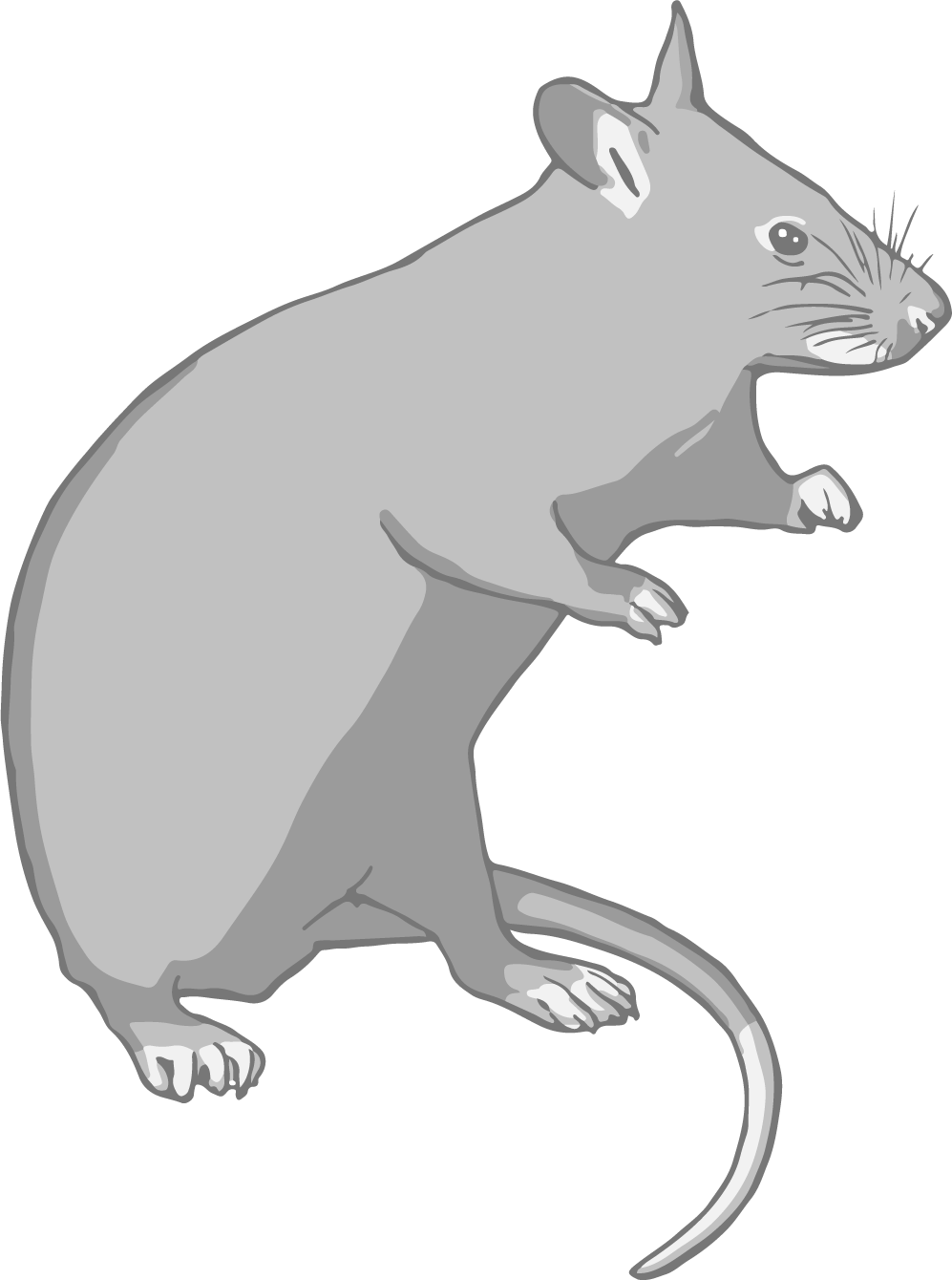
Giant pouched rats (genus Cricetomys) are large muroid rodents native to sub-Saharan Africa. They are only distantly related to true rats, having been reclassified from the family Muridae to Nesomyidae based on molecular studies. Their name refers to their large cheek pouches. These animals are valued as a food item in many African countries and have been trained to detect land mines and tuberculosis through scent, a role that has brought them international attention.
- head and body length
- 25–45 cm (10–17.5 in)
- tail length
- 36–46 cm (14–18 in)
- weight
- 1.0–1.5 kg (2.2–3.3 lb)
- gestation
- 27–36 days
- litter size
- 1–5 young
- nipples
- 6–8
- litters per year
- up to 10
Lore & Background
Giant pouched rats are nocturnal omnivores that feed on vegetation and small animals, especially insects, with a particular taste for palm nuts. Females can produce up to ten litters yearly, with gestation lasting 27–36 days, and typically give birth to one to five young. The animals have between six and eight nipples. They are easily tamed as pets but were associated with a monkeypox outbreak in the USA in 2003, leading to a ban on importation to the U.S.
Reader's Guide
Giant pouched rats have gained significance through their use by APOPO, a nonprofit social venture based in Tanzania, for detecting explosives and tuberculosis. Their acute sense of smell allows them to locate TNT in land mines without triggering them due to their light weight. They have reassessed 52% of initially negative tests as positive, and in some cases detected TB before clinical tests confirmed it. These trained rats are called HeroRATs. Their legacy includes both practical humanitarian applications and a cautionary note regarding disease transmission.
Did You Know?
- Giant pouched rats are only distantly related to true rats and are now placed in the family Nesomyidae.
- They were associated with an outbreak of monkeypox in the USA in 2003 and have since been banned from importation to the U.S.
- APOPO trains them to detect land mines by associating a clicker with a banana or banana-peanut paste reward.
Physical Form and Taxonomic Identity
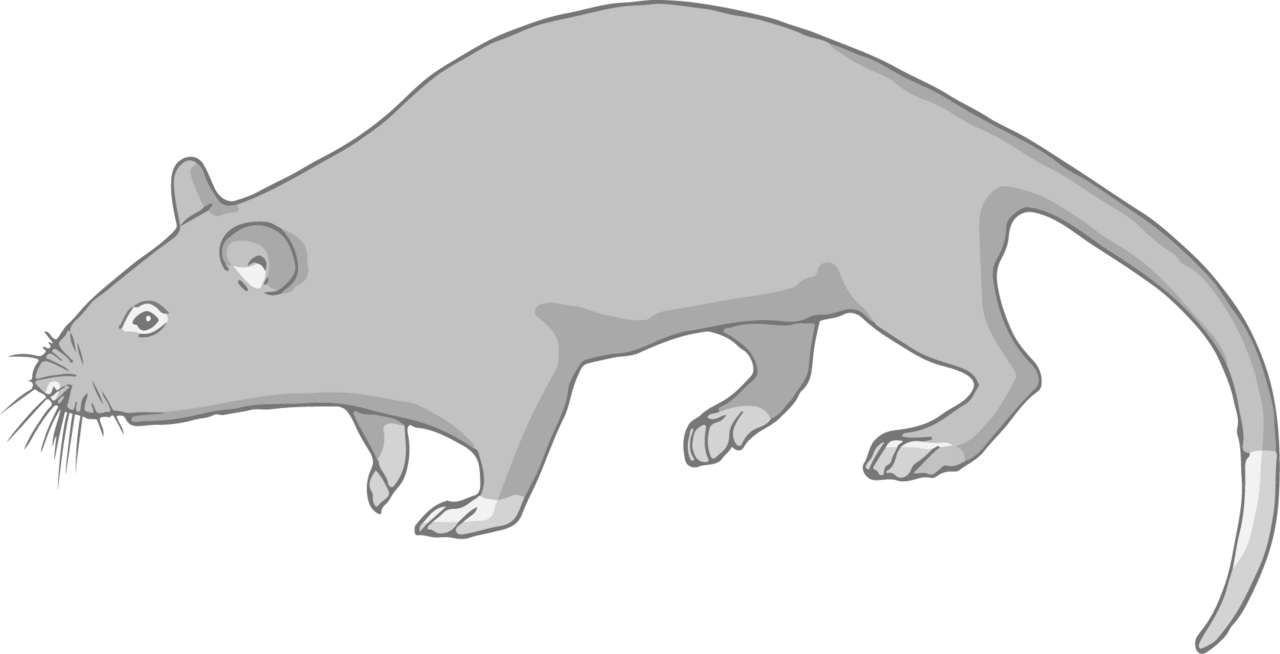
The giant pouched rats, classified under the genus Cricetomys, are among the larger muroid rodents found across sub-Saharan Africa. Adults measure between 25 and 45 centimetres from head to body, while their scaly tails add another 36 to 46 centimetres. Their body mass typically falls in the range of one to one and a half kilograms, making them substantially heavier than the house rats most people picture when they hear the word rat. Despite the common name, these animals are only distantly related to true rats. For much of the twentieth century they were grouped within the family Muridae, but molecular evidence has since repositioned them in Nesomyidae, a lineage that represents an ancient radiation of muroid rodents across Africa and Madagascar. The pouched in their name is no accident: they possess notably large cheek pouches that distinguish them visually from other rodents and give the group its distinctive appearance.
Nocturnal Foraging and Reproductive Strategy
Giant pouched rats are creatures of the night, spending their active hours foraging as omnivores across the African landscape. Their diet is broad, encompassing a variety of vegetation as well as small animals, with insects forming a particularly favoured component. They also show a marked preference for palm nuts, which they seem to seek out with particular enthusiasm. Reproductively, these rats are remarkably prolific. A single female can produce as many as ten litters in a year, with a gestation period lasting only 27 to 36 days. Each female carries between six and eight nipples, and litters typically consist of one to five young. This combination of short gestation, frequent breeding, and multiple offspring per birth means that populations can grow quickly under favourable conditions, a trait that carries both ecological significance and practical implications for how human communities interact with these animals across the continent.
The HeroRATs: Sniffing Out Danger and Disease
Perhaps the most remarkable chapter in the story of giant pouched rats is their growing role as detection animals. The nonprofit APOPO, based in Tanzania, trains these rodents to identify explosives and tuberculosis, a programme whose training methodology was conceived by Belgian researcher Bart Weetjens. Training begins when pups are just four weeks old, starting with gentle handling to acclimatise them to human presence. They learn to associate a clicker sound with a reward of banana or banana-peanut paste, then progress to nosing a hole containing TNT for five seconds, identifying the correct hole among a row, and finally working outdoors on a lead to locate buried, inactivated mines. Certification requires a blind test across 400 square metres where handlers do not know mine positions. The same animals are now deployed to sniff sputum samples for Mycobacterium tuberculosis, processing 100 samples in roughly 20 minutes where a laboratory would need up to four days. In some cases the rats have flagged TB before clinical tests could confirm it. As of 2024, these HeroRATs are actively screening in Tanzania and Ethiopia.
Between the Kitchen, the Cage, and the Screen
The relationship between giant pouched rats and human communities is layered and sometimes contradictory. In numerous African countries these rodents are prized as a source of food, representing a practical and culturally embedded protein. At the same time, their docile temperament makes them readily tamed as companion animals, and dedicated enthusiast communities have formed around keeping them. However, their popularity as pets in the United States came to a sharp halt after they were linked to the 2003 monkeypox outbreak there, prompting a ban on their importation into the country. In popular culture, the species has made at least one notable cinematic appearance: Ben, the rat in the 2003 remake of Willard, was specifically a Gambian pouched rat, bringing the animal to a wider audience. These varied roles, from sustenance to pet to screen presence, illustrate how a single species can occupy multiple, sometimes conflicting, positions within human societies.
Gallery
Frequently Asked Questions
What is a Giant pouched rat?
The Giant pouched rat (genus Cricetomys) is a large muroid rodent found across sub-Saharan Africa. Despite its name, it is only distantly related to true rats and belongs to the family Nesomyidae rather than Muridae.
How big and heavy is a Giant pouched rat?
Adults measure roughly 25–45 cm in head-and-body length with a tail adding another 36–46 cm, and they typically weigh between 1.0 and 1.5 kg. Their most distinctive feature is a pair of oversized cheek pouches that give the group its common name.
What are Giant pouched rats famous for?
They have been trained to sniff out buried land mines and to detect tuberculosis in human sputum samples, earning them international recognition beyond their native range. In many African countries they are also a valued source of food.
How is the Giant pouched rat related to common rats?
Molecular studies reclassified Cricetomys out of Muridae and into Nesomyidae, revealing that the connection to house rats is only a distant one. They share the broader muroid lineage but diverged into a separate family long ago.
How do Giant pouched rats reproduce?
A single gestation lasts about 27 to 36 days, after which a female gives birth to a litter of one to five young. Females carry six to eight nipples to nurse the offspring.
More in Rodents And Small Mammals 1-18
Spotted an error? Know more?
This is a living reference — every entry is fact-audited, and reader corrections feed straight into our audit queue. Suggest an edit · See this site's audit record